Saturday, May 16, 2020

Paatal Lok - Review

Amazon Prime’s latest original, Paatal Lok, opens with a scene in a Police jeep. A seemingly senior cop is driving while explaining to his subordinate the concept of ‘teen lok’, as per mythology. He later says Outer Yamuna Paar, the area under his jurisdiction, is ‘Paatal Lok’, because it only has pests and the downtrodden. Until, a high-profile assassination bid is foiled and the case lands on his table for investigation. Sub Inspector Hathiram Chaudhary (Jaideep Ahlawat), leads us through the investigation which is complicatedly knotted with politics, gangsters, petty thieves and a media baron, Sanjeev Mehra (Neeraj Kabi), who is to be assassinated. As Hathiram and his junior cop, Ansari (Ishwak Singh) untie the knots, a deeply rotted system is uncovered.
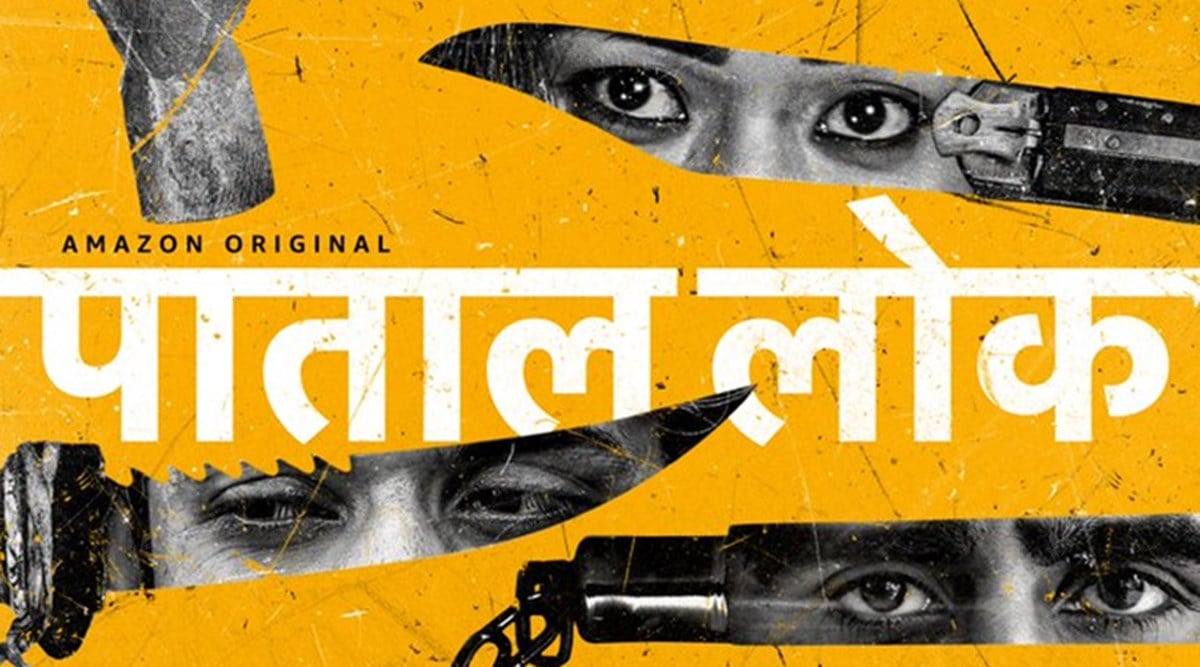
At the core of the investigation are four accused – Mary Lyngdoh, a masseuse and a call girl; Kabir, a petty car thief; Tope Singh, a murderer on the run and Vishal Tyagi (AKA Hathoda Tyagi), a criminal accused in 35 brutal murders, using his favourite device – a hammer (hathoda). What begins as an investigation into the aborted attack on Sanjeev Mehra soon turns into the unravelling of muck in the system – the deadly nexus between politicians & gangsters and the power-hungry media ready to sensationalise any ‘fake news’.

Paatal Lok teaser: Anushka Sharma's web series promises to be a ...

But, Paatal Lok, gives us much more to ponder about, commenting on almost all the issues in our society today. From the blatant discrimination of people on the basis of caste and religion to the plight of the LGBT community, the series touches upon a lot of uncomfortable issues. And the writers do not make any of the issues come to the foreground or force it into the narrative – all of them have been subtly put, without giving a judgement and leaving the viewers to draw conclusions. The show also brilliantly uses recent news events to weave into the story – there is even a mob lynching sequence for allegedly eating beef! Again, none of these sub-plots deviate from the main premise – investigating the four accused.

It also made me question what makes us ostracise or look down upon a person or a community? Is it because people are ill-treated and marginalised, that they take to violent means to vent out their ire? Or is it because of their actions that they are marginalised? You ask this question more than once here– when a young boy is bullied for being born in a lower caste and he violently slits their throats. You also question this when a schoolboy avenges the rape of his sisters by breaking the skulls of the rapists. It also crosses your mind when you see a boy from a modest background being bullied by his rich friends in a posh Delhi school, leading to him pointing a gun at them. In all the three incidents, you see the oppressed being pushed against the wall and the society being responsible for their actions. But the question remains answered – who takes the blame here? Like a character says in the movie, ‘Jab bande ke paas koi aas na ho, toh who chup chaap sehen kar leta hai. Par jab mann mein aas paida karde toh? Badi gandi cheez hai aas’ (A person silently endures when he has no hope. But when you ignite hope? Hope can wreck people’)

Paatal Lok is terrifying and has some disturbing moments which are, sadly, a reflection of our society. While it succeeds in dwelling into multiple issues, it tends to lose some steam, especially in episodes 6 and 7, where it starts to feel a bit slow. However, that is a very minor aberration. I also liked the fact that the show does not show a Sub-Inspector to be larger than life, just because he is at the centre of the story. Like he says towards the end, ‘main chhota aadmi hu sahib, chahu toh kya kar sakta hu?’ (Am a small man sir, even if I want, what can I do?) Unlike Sartaj (Saif Ali Khan) from Sacred Games, who is almost invincible, Hathiram in Paatal Lok feels more real, rooted and vulnerable.

The fact that the show has stellar actors only makes it an even better watch! Neeraj Kabi as the manipulative leftist media baron is well cast. Abhishek Bannerjee gets only two or three dialogues in the entire show yet speaks volumes through his menacing eyes and spine-chilling demeanour. The rest of the case is great too, especially Ishwak Singh and Jagjeet Sandhu as Ansari and Tope Singh, respectively. Gul Panag is nicely cast as a supportive wife; however, I found her accent and language a bit odd for the milieu that she belonged to. If that was a deliberate character trait, it wasn’t explained well.

But the star here is Jaideep Ahlawat, in a spectacular performance as SI Hathiram Chaudhary. He shoulders the show perfectly and does not get a single acting note wrong. This will certainly stand out in his body of work. Not just the scenes at work, see him in the confrontational scene with his son and his friend Raju, he is menacing yet a concerned father. Having a troubled childhood, he continues to battle inner turmoil, which reflects in his broken relationship with his son and a stagnant career. Jaideep delivers with aplomb!

Paatal Lok can shook you and touch uneasy nerves, but in the end, you realise it is probably a reflection of the reality we live in. You realise this is hell – this is Paatal Lok!

My Rating – 4/5

Saturday, January 25, 2020

Panga - Movie Review

One of the basic tenets of good cinema is that it should be all-consuming and engrossing. Even if the viewers know the beats of the story and can predict the end, it is the story-telling and performances that carry the power to keep its viewers hooked. Director Ashwini Iyer Tiwari’s third directorial, Panga, starring Kangana Ranaut, Richa Chadda and Jassi Gill is an endearing and heart-warming tale of a former Kabaddi captain making her comeback after a hiatus of 8 years.

While the plot may sound like a sports biopic on the lines of Sultan (2016) and Dangal (2016), on the contrary, writers Ashwini Iyer Tiwari and Nikhil Mehrohtra make us a part of the rich world of a simpleton in her early 30s, taking us through her chores and suppressed ambitions. Jaya Nigam (Kangana Ranaut) is a 32-year-old, mother of a 7-year old kid, married to a railway engineer and working as a ticketing clerk. In the words of her doting husband, Prashant Shrivastava (Jassi Gill), she values three things the most in her life – her husband, her son (Yagya Bhasin) and Kabaddi. During the day, Jaya is any regular working woman – tending to her family’s needs, juggling between her work & home and a playing an extra cautious mom to her son, who has an immunity disorder. Though she puts up a facade of happiness during the day, it is in her sleep that the kabaddi player inside her is awakened, with her poor husband bearing the brunt of her kicks!

Image result for panga

The rest of the story is anyone’s guess – it is Jaya’s journey back into Kabaddi. But, the treatment and narrative make us root for her, just as everyone else in her life does. Panga isn’t about Kabaddi alone, it is about the sacrifices and choices every regular woman makes – willingly or otherwise. Jaya puts this beautifully in a scene where she tells her husband that looking at him or at their son gives her immense happiness, but, looking at herself makes her regret not pursuing her passion. While she left Kabaddi at the peak of her career – as the Captain of the Indian team – she could never really let the sport leave her. But, like every Hindustani emotional mother, she is torn between her dream to make a comeback and her guilt of neglecting her family. A huge pat on the back of the director, Ashwini, for brilliantly showing Jaya’s dilemma, guilt and vulnerabilities. Also, for subtly driving home the point that it is only the women who are guilt-tripped into making tough choices while their husbands remain unremorseful. Though Prashant is an exception – he is an enormously supporting husband and a doting dad.

Panga also works a great deal because of its positive narrative – there are no real ‘villains’ or hinderances. While some may feel this is all too convenient and makes Jaya’s struggles easier, I beg to differ. The film presents an idealistic world – an extremely supportive husband, a best friend who trains Jaya or even a helpful neighbour looking after her son in her absence. While such an ideal world may be difficult to find in reality, this structure of Panga gives its viewers hope. It also subtly sends out the message to men and the society to encourage women to take a flight of their choice and not be caged by the burden of family and societal pressures. Kudos to the writers for not using monologues to sermon the audience but underplay it effectively.

After a slew of not-so-successful films, Kangana Ranaut is in top form in an equally well-made film. Playing a simpleton, she reminds us of Rani from Queen (2014), though she is a dutiful wife and mother here. She brilliantly expresses the various shades of an average woman and does not miss a single beat in any of her avtaars. One of my favourite scenes in the film is when she leaves home, even though her husband and son are supportive and encouraging, her eyes convey her hesitation and guilt in leaving her family. Playing her backbone, Prashant, Jassi Gill gives an honest performance as the man struggling to keep the house running in his wife’s absence. Their adorable son, Adi, played by Yagya Bhasin is a delight to watch. It is commendable to see such a young actor deliver quite a few laughs. Richa Chadda plays her best friend and Kabaddi mate, Meenu, who gets some of the best one-liners in the movie. If there is any actor who deserves to be on the screen more often, it has to be her!

Apart from Kangana, the credit for this lovely movie goes to its director-writer Ashwini Iyer Tiwari as well. Like her debut film, Nil Battey Sanatta (2016), which touched a delicate mother-daughter equation, Panga is her ode to the female tribe, giving them the impetus to fly and that it is never too late to pursue one’s dreams!

My Rating – 4/5

Wednesday, November 27, 2019

An ode to Ye Maaya Chesave!

It is often said that good cinema is a conversation between a movie and its viewers. It can not only transcend you to another world, but also leave its imprints when you are back to reality. Some movies become bed-time stories for kids, while some become vehicles for fans to rever their ‘stars’. Yet, there are some movies which have a calming and soothing effect on you. Commonly referred as ‘feel-good’ cinema (never really understood the origin of it!?), every cinephile has a set of movies that they keep going back to, probably to ‘feel good’ and cleanse the fatigue caused by life (and watching a variety of other cinema). Simply put, it’s the ‘reset button’ that restores you to ‘default settings’.

In my long list of favourites, Gautham Menon’s Ye Maaya Chesave (YMC) comes right at the top. After a long & tiring day at work, give me A R Rahman’s melancholy-filled beautiful soundtrack and the raw chemistry between the naïve and new, Samantha and Naga Chaitanya, and you have me sorted! If one isn’t a sucker for slow-burning love stories, YMC may seem slow and insipid. But, if one is patient with this movie, it most certainly grows on you.

YMC came out in 2010, when I wasn’t clued in enough about Telugu movies. Bollywood was Bae then. On a lazy afternoon with nothing better to do, I decided to watch YMC only because I saw A R Rahman’s name on the poster. Mind you, this was the 8th or 9th week after its release and I hadn’t even heard a single song or seen its trailer. It was a noon show in an almost empty screen at Cine Planet, Kompally, Hyderabad (I reckon it has become Asian Cinemas now). The fact that I had zero expectations helped YMC take over me completely over the next two and half hours.

Image result for ye maaya chesave

Rahman’s magic begins with the soothing instrumental version of Hosaana, played along with the opening credits. After meandering through the backwaters of Alleppey, we are taken to a church where the leads are introduced to us in the backdrop of a wedding. A young boy (Naga Chaitanya) in the guests begins with the movie with a question that essentially becomes the recurring question (for the viewers as well) – Prapancham lo inta mandi ammayilu undaga, nenu Jessie (Samantha Akkineni) ne enduku preminchanu? Aah! The wails of a broken heart! It is quite clever of Gautam Menon (also the writer) to set the theme right in the first scene itself. Because the rest of the movie revolves around you trying to decipher and decode Jessie.

We are quickly taken back in time. Karthik (Naga Chaitanya) is a mechanical engineer with keen interest in film-making. While trying his luck in the films, he falls for his Christian Malayali landlord’s daughter, Jessie. Jessie, two years older than Karthik, is an obedient daughter who wears cotton sarees to work and is raised in a family that considers movie-watching a sin! But, fate makes Karthik fall for Jessie in the first sight itself! But you cannot blame him. The stunning cinematography by Manoj Paramahamsa can make anyone fall in love with the beautiful girl walking awkwardly in a blue cotton saree. Just like Karthik, even the viewers are in trance and A R Rahman’s soulful music only pushes one further into it. Very few contemporary directors (other than the late Yash Chopra) romanticize the beauty of their heroines the way Gautham Menon does. Jessie is one such epitome of beauty and grace.

Along with the opposing the couple, Gautham Menon layers YMC with a highly confused and complex character, that of Jessie. Her stoic and unaffected face acts as a perfect façade for her internal turmoil. While she likes Karthik, she cannot admit it fearing the wrath of her domineering father. She first rejects Karthik, berates him, walks out on him. But then, she also breaks her wedding and feistily admits her love. A moment she appears calm & patient and the next moment she impulsively breaks up with Karthik. None of this makes her look demented. She is a victim of her circumstances and ends up messing up two lives – hers and Karthik’s. You root for them when Shreya Ghoshal mellifluously sings ‘Vintunava’ and we see Jessie & Karthik unite. You root for them harder when a sinful ‘Aaromale’ plays to the backdrop of their separation and estrangement.

The makers deserve a pat on their back for writing such a layered character and then trusting a complete newcomer with it. It is an undeniable fact that the fresh leads appear unbaked in their skills as actors. While many may disagree with me, I think their raw chemistry and unpolished acting skills add to the depth of their characters – they are two young and confused people torn by love.  

Another reason why the movie worked for me is that it ended on a positive note. For such a melancholic story of love and separation, when the estranged lovers meet in Central Park, New York, you can’t help but root for them! Speaking of which, the sequence between the two in Central Park is one of the best scenes in the movie. (I know the dialogues of this scene by heart!). The shock to see your beloved after a sudden separation and then the small talk to break the ice is captured brilliantly! The vastness of Central Park complements their palpable sexual tension. When an impulsive Jessie agrees to marry Karthik, almost as impulsively as she breaks up with him over a text, one tends to forgive her! This high that the viewers get at the end is a perfect reward for staying through their love story. Fortunately, Gautham Menon altered the sad end from the Tamil original and am glad he did!

I write this as I watch Yem Maaya Chesaave for the millionth time. After a long day at work, on the eve of Gautham Menon’s next release, Enai Noki Paayum Thota, I want to reset myself with this ‘feel-good’ movie.

Saturday, September 7, 2019

Chhichhore - Movie Review

In the opening scene of this week’s release, director Nitesh Tiwari’s Chhichhore, we see a plumpy young hosteller run through his college hostel in underpants with a bucket of water in the middle of the night. Sexa (Varun Sharma), as the names suggests is a lecherous lad, who wakes up his friend, Anni (Sushant Singh Rajput) with a mischievous plan to drench the entire hostel. Soon, the entire hostel – H4 joins in, with kids pouring water on each other for fun! Its Holi in the middle of the night! This pretty much sets the tone of the 2-hours that are about to unfold in front of you. Chhichhore is writer-director Nitesh Tiwari’s ode to friendship and bonds made in college.

After watching the movie, I realised how college drama can be legitimately considered a genre of its own. They usually follow three common templates – college dramas centred around sports like Jo Jeeta Wohi Sikandar (1992), Student of the Year (2012) or love stories such as Dil (1990) and Kuch Kuch Hota Hai (1999) or the ones made around friendships in college like 3 Idiots (2009). But, Chhichhore falls between a sports drama and a movie on friendships. It is a heart-warming tale about friendship, eccentric hostellers in engineering colleges and how failure is not the end of the world.  While the movie is well-intended and wishes to make a point about the unnecessary pressure today’s kids go through to crack competitive exams, the message gets distorted in the din of the crazy antics of the 6 friends – the LOSERS!

Image result for chhichhore

Set in the 1990s in India’s best engineering college – National College of Technology, Mumbai (assuming it to be IIT-Bombay), Chhichhore is all about what happens outside the classrooms – ‘harmeless fun’ as Anni calls it. These are the crackling moments of the film filled with hilarious situations of seniors ragging their juniors, petty fights in the hostel and the scarcity of girls on an engineering college campus. Students even get rechristened with amusing pet names – the one who is always angry, toxic and abuses is ‘Acid’ (Naveen Polishetty), the momma’s pet is called ‘Mummy’ (Tushar Pandey) and the drunkard is called, well, ‘Bevda’ (Saharsh Kumar Shukla)! Since girls are scarce, a model-like girl is considered Halley’s comet – comes once in 75 years! And the comet here is Maya (Shraddha Kapoor), who chooses Anni among the hordes of boys that throw themselves at her.

The movie jumps between the past and the present, where the LOSERS are middle-aged people, who are reunited by a sudden unfortunate incident. Anni and Maya are married but estranged. The rest of the gang has aged with a receding hairline common between them and their equation and friendship intact as it was in college. And the reason for their bonding was not classrooms or general fun in the hostel. It was the college tournament – General Cup (deja vu of SOTY? Yes!), where the LOSERS of hostel H4 have always been at the bottom of the table. The writers cleverly use the General Cup (GC) to drive home the message that losing does not necessarily make one a loser.

The screenplay and editing of Chhichhore deserve the loudest applause. Instead of writing a linear narrative which has a single flashback portion woven into the present, the writers Nitesh Tiwari, Piyush Gupta and Nikhil Mehrotra use a complicated narrative that keeps switching between the past and the present, giving us a narrative which make both the timelines appear to be running in parallel. The writers also cleverly use the struggles and determination of the LOSERS to win GC as an analogy to a boy battling for his life. As I said, the intentions are noble, but the message isn’t driven home well. In 3 Idiots, the message was more pronounced – As Rancho says, ‘Success ke peeche mat bhaago, excellence ke peeche bhaago, success jhak maarke tumhare peeche aaegi’. We know that is the underlying theme of the movie. But Chhichhore falters in this aspect since the message is not as pronounced as I would have liked it to be.

The editing by Charu Shree Roy is perfect for such a convoluted narrative. For instance, see the magic of editing the sports sequences – we have a football, basketball and table tennis match intertwined and being played out for us in parallel, instead of showing each sport individually. The costumes and set design are also on point, recreating the 1990s perfectly well. The music, however, could have been better since there are no memorable numbers in the album. Also, the movie loses some steam post the interval but picks up soon, thankfully.

Another strength of the movie is the great performances from the entire cast. While Shraddha Kapoor as Maya, hardly seems to have aged in her older portions, she provides ample support as the lone girl among the bunch of boys. Tahir Raj Bhasin and Sushant Singh Rajput as Derek and Anni are good as the chief-and-his-deputy combo. Navin Polishetty seems to have a hangover of the ranting and angry characters he has played in his viral Youtube videos, yet, is delightful as the cussing Acid. But, it is Varun Sharma as Sexa, who steals the show. With naughtiness in his eyes and innocence in his antics, he is a treat to watch thanks to his brilliant comic timing. After Choocha in Fukrey, he played inconsequential sidekicks in other films, but finally gets to play a character that is as big as Choocha and honestly, more hilarious!

Chhichhore is a nostalgia-filled ride that uses a great premise to talk about the social pressure on kids today. While I was not completely convinced with it, the fact remains that the movie has its heart in the right place and thus, deserves a watch!

My Rating – 3/5

Saturday, August 10, 2019

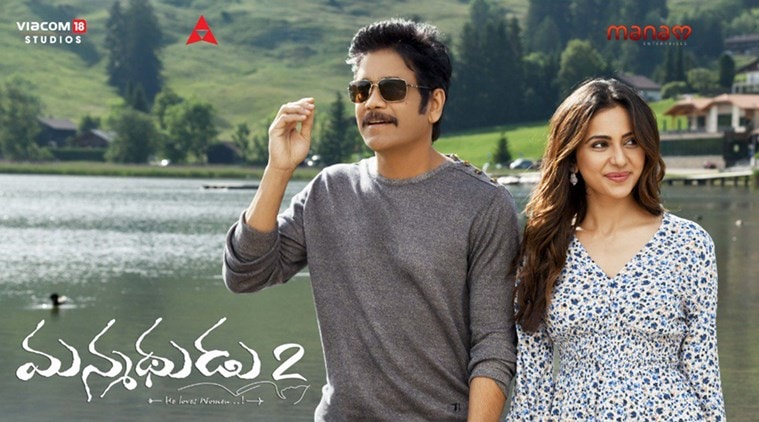
Manmadhudu 2 - Movie Review

In an interview recently, Nagarjuna admitted that director Rahul Ravindran has a distinctive style of filmmaking, which does not necessarily communicate with the masses. It is something labelled as offbeat cinema. Nagarjuna’s Manmadhudu 2, written and directed by Rahul Ravindran, is his push into the bigger and massy film genre. On a day when he won the National Award for Best Screenplay for ‘Chi La Sow’, his big-ticket, Manmadhudu 2, hit the big screens. Retaining only the title and male lead from ‘Manmadhudu’ (2002), Manmadhudu 2 is a modern day take on the life of a Casanova pestered into getting married. But its convoluted story-telling leaves you disappointed.

Set in Portugal, the story is centred around a middle-aged singleton, Sam (Nagarjuna) who is a third-generation Indian in Portugal. A brief history of the family reveals how Cassandra in Portugal was inhabited over the years by people of Telugu origin – a clever alibi explaining the large number of people speaking Telugu in Cass’Andhra’. A perfumer by profession, Sam has a sharp taste in exotic fragrances and pretty women – explained adequately through the song, ‘Menina’ (girl in Portuguese). Unaware of his philandering, flamboyant lifestyle, his family – Matriarch mother (Lakshmi), sisters (Jhansi, Devadarshini and Nishanthi) plead, prod and force him to get married because “neeku evaru vandi pedtaru, evaru battalu utukutaru, evaru illu chuskuntaru?”. Yes, a Portugal-bred family has such regressive and irrational reasons. Well, in their defence, “Panivaalu Portugal lo dorkaru”! With a lame premise as this, the movie becomes a ride into turning the womanizer into a householder. Enter Avantika (Rakul Preet) a young waitress who is chosen to be married to Sam. And the rest is just a convolution of elements of mass appeal and a Rahul Ravindran style of slow and simmering filmmaking.

Image result for manmadhudu 2

Rahul Ravindran has been a part of mostly indie and offbeat films, both as an actor and director. His sensibilities are different from the tropes needed in a commercial Telugu film. With Manmadhudu 2, he tries to retain his traits of simple story, subtle humour and conversational story-telling. But this does not come out effectively, mainly because of the poorly written dialogues. The premise is that Telugus in Cass’Andhra’ speak chaste language – something which could have been used effectively for comic relief. But lines like ‘Madhuramaina vyaktivi’, ‘antaraayam kalingchaku’ and ‘Vaidyulu em anaru’ seem farcical. As Sam’s PA, Kishore (Vennela Kishore) says, it is Doordarshan Telugu which is hard to decipher. Barring a few places where it is used comically, it acts as a hindrance to connect to the characters. Also, the uneven pace does not help either – some situations are elaborate while others move swiftly. The biggest inconsistency is the way the lead character has been written. There is not enough explanation for Sam’s aversion to marriage (except his already vibrant life). The love-hate relationship he has with his doting family, which almost makes him look like a Man-child, is not explained well. His quirks like a sensitive nose and OCD for cleanliness do not add anything to the story. The entire blame falls on the writing – the idea was novel but failed in writing or execution.

Coming to the supporting cast, only Rao Ramesh and Lakshmi play on the strengths of their acting prowess and stand out. Vennela Kishore gets major screen-time as the side-kick, but the dialogues or situations do not give him enough material to play with. Even his comic timing does not deliver enough laughs. Nagarjuna looks dapper and is a treat to the eyes, until he takes his sunglasses off, revealing his paunchy-eyes that give away his age. As admitted by himself, he is not a great actor but a great star- not disappointing his fans on the star quotient. But, he is uneasy and listless in most of the scenes that require emotion. Even the short flashback which is meant to explain his current state has him overact and create a caricature out of himself. It was refreshing to see Rakul Preet hold her ground by delivering a strong performance. She flaunts her curves as much as she displays her emotions. But, her efforts go in vain as it does not hold the movie together.

Cleverly naming the movie as Manmadhudu 2 ensured a certain section of the audience to return to the theatres, expecting the fun and frolic ride of ‘Manmadhudu’. But, if you expect Trivikram’s stellar dialogue writing, impeccable comic timing of all the actors and a coherent story, you will be disappointed.

My Rating – 2/5