Sunday, July 26, 2020

Dil Bechara - Movie Review

At the beginning of Disney+ Hotstar’s ‘Dil Bechara’, the protagonist, Kizie Basu (Sanjana Sanghi), sums up the movie for us – Ek thha raj, ek thhi rani, dono marr gaye, khatam kahaani. In the Hindi screen adaptation of ‘Fault in our Stars’, we get a narrator in Kizie, who suffers from thyroid cancer, giving us a glimpse of her morose life, until the flamboyant Immanuel Rajkumar Junior AKA Manny (Sushant Singh Rajput) enters it.

This is not the first time we have a movie with terminally-ill protagonists. From Anand to My Brother Nikhil or Guzaarish, we have had makers tell us stories of diseases and the deceased. Dil Bechara comes closest to Mani Ratnam’s 1989 hit, Geethanjali. Thematically, both the movies have the same beats – terminally ill protagonists, one of them has a zeal for life and helps the other one come around. However, Geethanjali was in a much lighter vein and Mani Ratnam downplays their agony and pain, which is more pronounced in Dil Bechara. Other way to look at it – probably Dil Bechara has a more real take on the lives of the terminally ill – their bouts of health problems, their inner battles and mental turmoil. So, we get to see a sombre Kizie always walking around with ‘Pushpinder’ (her oxygen cylinder), her fluctuating health and recurring cancer counselling sessions. Her sullen life is lit up when Manny, a patient of osteosarcoma, enters her life and brightens it up.

Dil Bechara' review: Sushant Singh Rajput steals the show in his ...

Manny has a completely contrasting take on life. Belonging to a rich household (much of which we are not told about) and probably being able to afford best of medical care, he has a more positive approach towards life. A chain ‘smoker’, he likes to hold cigarette in his mouth without lighting it. He says its metaphorical – something that causes cancer has been rendered useless by a cancer victim. He is a Thalaivar AKA Rajinikanth fan and wishes to fulfil his best friend’s dream of directing a Bhojpuri flick. Kizie, who frequents funerals as a hobby, is chosen as his ‘leading lady’ in this ‘movie’ being shot on a handycam. Expectedly, he manages to make Kizie look at life better and fall in love with him, ending up romancing in Paris. But, does Kizie’s opening story - Ek thha raj, ek thhi rani, dono marr gaye, khatam kahaani - come true? Is their story ephemeral? Watch to find for yourself.

Dil Bechara, with a crisp running time of 100 minutes, does not thankfully meander into unnecessary subplots. We do not have cliched sad drama involving the families – everyone is unbelievably nice. But, unlike Geethanjali which focussed more on their love story, Dil Bechara takes to the tragic pain that the protagonists go through, making it a not so easy watch. Coupled with the collective pain we have been experiencing since the untimely death of the lead actor, the movie feels a lot heavier than it intended to be. For a movie title hinting at a love story, this required to be more on the romantic side. (Except a glimpse in the song ‘Khulke Jeene Ka’, not much of it is seen). But it ended up being a movie on life and death.  

A R Rahman’s music compliments the theme well, though ‘Main Tumhara’ - the track that brings them together and acts as a major plot point, could have been better. Performance-wise, Saswata Chatterjee, Swastika Mukherjee and Sahil Vaid provide good support to the leads. Sanjana Sanghi is promising in her maiden lead attempt and uses her petite frame to transition from an awkward college student to a girl madly in love. Sushant Singh Rajput, in his last acting stint, is good as the goofy Manny, giving us laughs and then takes us through his pains with equal conviction.

But, as everyone has been saying (and warning), Dil Bechara does not deserve to be ‘critiqued’ and ‘rated’. It is a tribute to Sushant Singh Rajput and I would also leave it at that (which means no rating). Watch it, but beware of tearing up (mostly because of SSR, the actor and not the character).

P.S: I admit it wasn’t easy watching this movie objectively, after the sad turn of events in the past few days and the cacophony that followed. That is why I decided to sleep over it to clear my thoughts and be able to pen them better. It is ironic that a young star, with promising acting skills, could not take inspiration from his zealous character, Manny. While watching the movie with a mind shrouded by the recent unfortunate events, one may find the dialogues sting at you. When Manny says ‘hum kab marte hai yeh hum decide nahi karte’ or when he begs Kizie ‘Can we pretend am not dying aur kahi nahi jaa raha’, you wonder if only Sushant Singh Rajput, the actor, had taken these words to reinforce himself.

Wednesday, June 24, 2020

Bulbbul - Movie Review

In a crucial scene in Netflix’s latest release ‘Bulbbul’, we see the younger daughter-in-law of the house, Binodini (Paoli Dam), console a shaken ‘badi bahu’, Bulbul (Tripti Dimri), ironically, with dark and disturbing words. In the end, Binodini says, ‘Bade haveliyo mein bade raaz hote hai’ – which sums up this seemingly predictable, yet intriguing movie with disturbing undertones. Written and directed by Anvita Dutt, Bulbbul is a drama in the guise of a thriller, which challenges patriarchy and the state of women in Bengal Presidency in the late 1800s.

Bulbbul opens with a wedding in 1880s, where a child bride, Bulbul, is married off to a much older man. The groom – Bade Thakur (Rahul Bose), is a feudal lord with a mentally unstable twin brother, Mahendra, his suspicious wife, Binodini, and a teen brother, Satya, older than his newly wedded ‘bride’! The kids grow up playing together, with Bulbul being fond of Satya, more than her husband. This seemingly platonic relationship is broken when Satya leaves for London to study law (reminds of Devdas? Feudal lords, London, barrister). When he returns five years later, his home has changed – Bade Thakur has left the house, his twin brother is murdered and rumours of a dreaded ‘chudail’ killing men in the village. While he tries to unravel the mystery behind these deaths, the normalised patriarchy, male chauvinism and oppressive culture of the day come to the fore.

Bulbbul - Wikipedia

As evident from its trailer, Bulbbul is a spin-off on the fairy tales children grow up on. Unlike princesses and fairies, Satya and Bulbul have their world filled with demonic characters hunting evil. The murk that follows is majorly created by a shrewd & acerbic Binodini and unfortunate misunderstanding between the characters. Behind the grandeur of their haveli and shiny jewellery, they all hold dark secrets, stashed away from each other. Their affairs and dalliances are hushed, just as the bruises on their feet. As Binodini says, ‘Bade haveliyo mein bade raaz hote hai. Chup raho’. Along with bade raaz, social evils against women and their ill-treatment is normalised. But, will the ‘chudail’ obey the social construct and stick to the norm of ‘chup raho’? The mysterious murders seem to say otherwise. Bulbbul is as much a thriller as it is a commentary on the mistreatment of women.

The movie has a sharp runtime of 90-odd minutes and has been written well by Anvita Dutt, moving back and forth in time. However, the storyline is slim and one can predict the climax, which is a flaw. But I think the makers wanted to highlight the trials and tribulations of women – from child marriage to their place in the social construct, a lot of issues have been touched upon. And may be that is the reason why the thriller plot is a plain vanilla variant, and not developed intricately like a gourmet flavour.

Shot in tints of red, greys and burning fire, Bulbbul is visually an experiment which reminds us of the genius photography of Tumbbad (2019). Shot stunningly by Siddharth Diwan, the red tints symbolise Kaali – red, raging and thirsty for blood. After the rage reduces, we see the movie in tints of greys and blues, symbolising tranquillity. Or, probably, hinting at the approaching rage. A shoutout to the costumes and production design by Veera Kapur and Meenal Agarwal, for creating the grand and dark Bengal of the 1880s. Music by Amit Trivedi is sublime and goes well with the intriguing structure of the movie. Despite its predictability and flaws, Bulbbul is a brave attempt, especially for bringing leads in tones of grey. Even as we think of Bulbul as a docile, demure young girl, her mysterious smile holds dark secrets within. See her in the scene with a widowed Binodini – even as Binodini remains sugar-coated and throws a barb at her, Bulbul, does not take it back lying & stings harder. Talking of Binodini, while we see her as cunning, opportunistic and manipulative all along, we realise in the end that her circumstances and marriage to an unstable man make her the way she is. The only man in the household who appears mildly kind and understanding towards the women, Satya, actually turns out much like the other men – suspicious, jealous and trying to do ‘the man’s job’. On the contrary, Bulbul’s doctor and confidante, Sudip, is a more accommodative and supportive man – probably a rarity in those days (probably a rarity even today!?). It is these characters and their changing colours, which makes the movie intriguing.

Tripti Dimri is spectacular as Bulbul. She beautifully uses her docile face and smile to hide her pain and angst. She is complemented well by an equally unassuming Avinash Tiwari, as the friend-cum-estranged-brother-in-law. As the man in a patriarchal society, he grows to be a younger version of his brother and Avinash manages to exhibit this transition beautifully. Paoli Dam and Parambrata Chattopadhyay also perform well in their respective roles. But, the best performance here (apart from Tripti Dimri) happens to be of its producer, Anushka Sharma’s. While ‘Clean Slate Filmz’ has been churning out off-beat stories since its inception (NH10, Phillauri), they have upped their game in OTT space with a hard-hitting ‘Pataal Lok’ last month and a brave attempt in Bulbbul now.

Bulbbul has its flaws – biggest of which is its predictable nature. But the uncomfortable subplots and feminist angle do make it a relevant & interesting watch.

My Rating – 3.5/5

P.S: I had to give the additional half for the sheer cinematic vision and efforts put in by the technical crew.

Friday, June 19, 2020

Penguin - Movie Review


Watching debutante Eashvar Karthic’s, ‘Penguin’, instantly reminded me of Mysskin’s ode to Alfred Hitchcock – ‘Psycho’ (Tamil – 2020). While the plot and setting of this amazon release are different, there are quite a few similarities in the craft and subtexts, especially the handling of the gore. Also, it has a raw weirdness seen in movies by ‘off-beat’ directors, such as Mysskin. Named after a character from a kid’s story book, Penguin, headlined by a spectacular Keerthy Suresh, is a thriller about a mother’s unshaken resolve to find her missing son.

Like ‘Psycho’, Penguin is set in an eerie, misted-by-fog area (its’ Kodaikanal), has a recurring Christian cross and multiple references to Mother Mary, a not-so-subtle subtext of primal mother, under whose shadows we see an equally determined mother, Rhythm (Keerthy Suresh), looking for her lost son, Ajay (Master Advaith). Rhythm and Raghu (Lingaa) are a married couple living in a sprawling house in Kodai with their 2-year old son, Ajay, and a Labrador, Cyrus. Their child goes missing and years later, while Rhythm is pregnant again, the poor boy is found in the dark forests that hold the secret behind his disappearance and possibly, his captor. The rest of the story is how Rhythm tries to stitch the pieces together to unravel the mystery.

Penguin Movie Review: Some chills and many cheats in this ...

Penguin has a promising start, with the brilliant camerawork by Karthik Phalani, that captures the hills and valleys in misted hues of blue and grey, which add to the thrill. The makers use their shots to also convey their protagonist’s frame of mind – convoluted top shots and a reversing waterfall as Rhthym drives through winding roads, as she regresses to her past. This is complemented by the music of Santhosh Narayanan, which does not merely create cheap-thrills, but provides a rather complementing background score. Again, I invoke ‘off-beat’ Mysskinism here – when Rhythm and Raghu spot shoes and clothes of (presumably) their son, the music is not sad or emotional. On the contrary, it is positive (almost celebratory) with accordions playing away. This signals that though we may be staring at an impending doom visually, but there may be more than what meets the eye. Also, some details are well thought of – Ajay’s nomadic mental & physical state upon returning from captivity and Rhythm’s presence of mind in most challenging situations.

Technically, Penguin has a lot of strengths and deserves a pat for achieving these through mostly newcomers and novices. However, it falters in its writing and casting (barring its protagonist). The writer-director Eashvar Karthic chooses a formulaic ‘vengeful mother’ theme, which we have seen umpteen times, most recently in Sridevi’s Mom (2017). Though he sets out promisingly, he meanders into unnecessary tropes for thrills and gives us a contrived climax. While he jumps back and forth seamlessly in time, he does not develop characters well enough for us to relate to them in the unexpected (and disappointing) climax. In fact, the Labrador – Cyrus, gets better arc and space in the narrative than Rhythm’s husband. Speaking of characters – the casting is the other let down here. Except for Keerthy Suresh, who literally carries the film on her able shoulders, the supporting cast are one-tone and perform badly at their already poorly-written roles. Also, the screenplay has some loopholes such as Rhythm’s recurring dream, which remains unexplained.

Right from the posters and promos it was evident that Keerthy Suresh will do all the heavy lifting. And boy, she does it so well! She is convincing as a mother with unflinching conviction to find her son and does not lose steam for one bit. It’s so good to see her utilise her potential and makes me wonder why does she choose abysmal and inconsequential roles like Nila in Vijay’s Sarkar (2018). As Rhythm, she is not a superhero and is aware of her fallacies. It is her convincing portrayal that makes Penguin a decent watch.

Penguin had a lot of potential, but the convoluted second half culminating in an unconvincing climax, leaves you unsatisfied. It’s got enough thrills and gore, suitable for a mature OTT audience. Add a terrific Keerthy Suresh and you should be able to sit through.

My Rating – 2.5/5

Saturday, June 13, 2020

Gulabo Sitabo - Movie Review

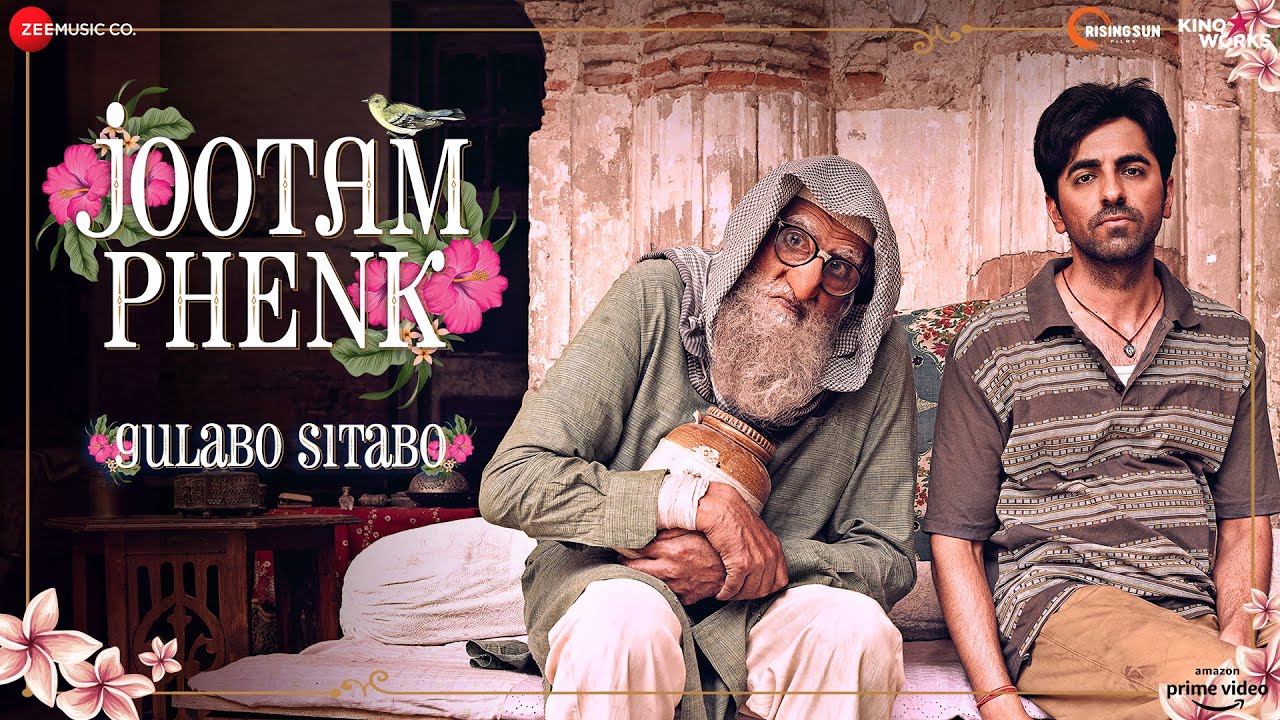
Director Shoojit Sircar's 'Gulabo Sitabo' opens with a roadside puppet show in Lucknow, featuring two quarrelsome puppets - Gulabo and Sitabo. The puppeteer sings - 'Sitabo phul gayi, Gulabo phul gayi' (Sitabo is flaring up, Gulabo is flaring up) about their conflict. Parallely, we get a glimpse of an old & rusty man, Mirza (Amitabh Bachchan), selling trivial things like light bulbs and cycle bells in scrap. The petty old man walks back to a sprawling but dilapidated haveli - Fatima Mahal. Owned by Fatima Begum (Farrukh Jaffar) and managed by Mirza, the dingy 'mahal' (one cannot really call it that) has a bunch of tenants, who have inhabited the place for decades but pay a paltry 70 bucks as rent. Among them, Baankey Rastogi (Ayushmann Khurrana) makes for a perfect Gulabo to Mirza's Sitabo - the two are always at loggerheads with either one trying to outwit the other.

At a superficial level, Gulabo Sitabo is a landlord-tenant saga we have seen in various movies, the last of which I can remember was Priyadarshan's 2001 flick, 'Yeh Tera Ghar Yeh Mera Ghar'. But, Gulabo Sitabo goes deeper - it also throws light on the sad and deprived lives that some of the erstwhile royal families lead in India, of which Fatima Begum and Mirza are fading examples. 70 years after Indian independence, the royalty and the pauper live together and both run after meagre alms. The movie also shows us how the simpletons of our country are taken for a ride by street-smart people and probably, their own government. When Mirza sells petty things form the 'mahal' and faints at the mere sound of a large sum of money, you think he is a miser looking to make money - by hook or crook. When Baankey disses his landlord and escapes from paying rent, you think he is being unfair to his shrewd but elderly landlord. As the knots open, one realises that our protagonists are not bickering Gulabo-Sitabo, but are just the victims of their circumstances and money (or the lack of it) has made them the way they are. While the theme and intent is noble, Gulabo Sitabo falters in conveying the message to its viewers.

Jootam Phenk -Gulabo Sitabo| Amitabh Bachchan, Ayushmann Khurrana ...

Shoojit Sircar collaborates with his successful writer partner, Juhi Chaturvedi. Sircar-Chaturvedi combo are known for their quirky stories, realistic relationships and endearing characters. Much like the achingly beautiful, October or the gastronomic fun, Piku, Gulabo Sitabo is a slow and simmering tale which requires its viewers to immerse in their world. I felt the biggest problem here was the OTT release. With streaming platforms, one has access to a variety of content at their fingertips. For a movie being streamed at home, it is very important for it to be effective and interesting over the various distractions at home. To savour and relish something like Gulabo Sitabo, one needs an all-consuming attention and closed environment which can only be experienced in a theatre. I think this is where Gulabo Sitabo did not connect with me as much as I would have liked it to. Having said that, Gulabo Sitabo was meant to have a theatric release and probably that's why it was not tailored for streaming platforms. Yet, it remains a decent watch, if not as delightful and endearing as Sircar-Chaturvedi's previous works.

What works for the film is its cast and their on-point performances. Amitabh Bachchan is brilliant as the annoying and aging Mirza, hated by everyone yet your heart tugs at him towards the end. Right from his gait to his urdu to his look, he transforms from the BigB that we know, to a completely different person. Its baffling how he plays a Bhaskor in Piku and a Mirza in Gulabo Sitabo with such ease & elan. Ayushmann Khurrana (with a lisp) is nice as the uneducated and gullible bread-winner of his family. His character, along with the other gullible tenants and Mirza, show us how the needy are exploited at the hands of those in power. The rest of the cast fit well into the narrative especially Vijay Raaz and Brijendra Kaala as the manipoulative government official and lawyer, respectively. Special mention of Srishti Shrivastava as Guddo, Baankey's educated, sharp-tongued and smart sister. The cinematography by Avik Mukhopadhyay paints Lucknow vividly and creates a gloomy yet endearing Fatima Mahal for us. The stunning visuals are supported well by the folksy tunes by
Shantanu Moitra.

Honestly, I really wish Gulabo Sitabo worked better for me, having been a fan of Juhi Chaturvedi's writing and Shoojit Sircar's voice as a director. Probably it required an immersive movie experience that only theatres give us and it did not connect well when the medium changed from a big screen to a TV. But, all said and done, Gulabo Sitabo still deserves a watch for its delightful performances and a quirky story-line.

My Rating - 2.5/5

Saturday, May 16, 2020

Paatal Lok - Review

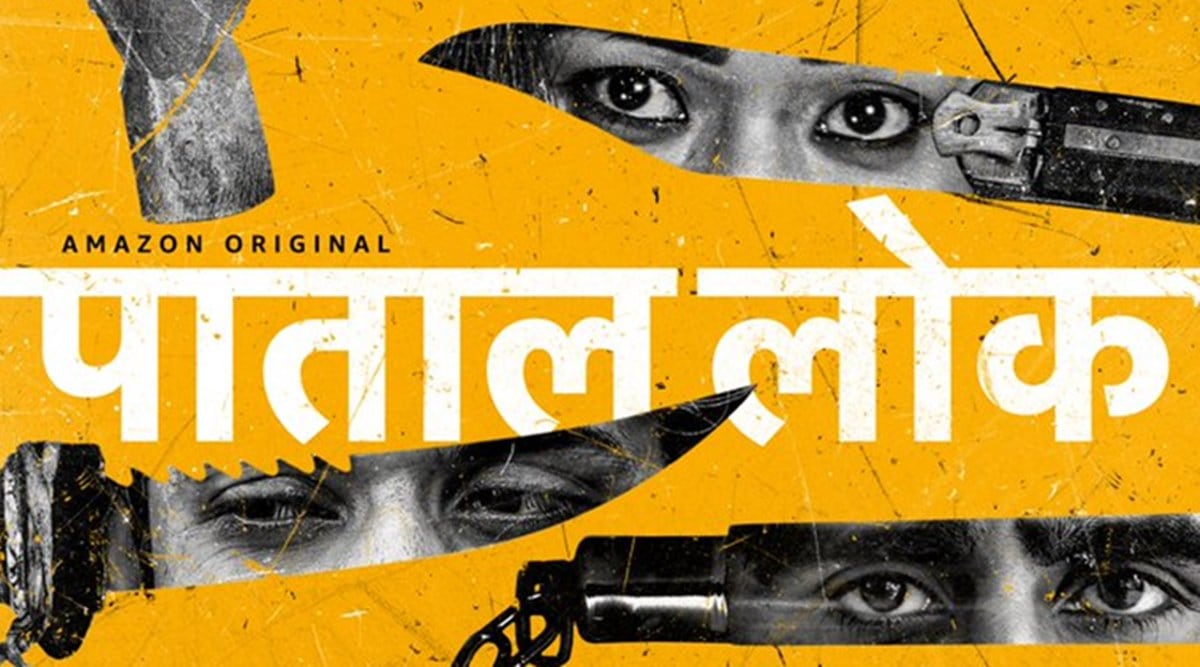
Amazon Prime’s latest original, Paatal Lok, opens with a scene in a Police jeep. A seemingly senior cop is driving while explaining to his subordinate the concept of ‘teen lok’, as per mythology. He later says Outer Yamuna Paar, the area under his jurisdiction, is ‘Paatal Lok’, because it only has pests and the downtrodden. Until, a high-profile assassination bid is foiled and the case lands on his table for investigation. Sub Inspector Hathiram Chaudhary (Jaideep Ahlawat), leads us through the investigation which is complicatedly knotted with politics, gangsters, petty thieves and a media baron, Sanjeev Mehra (Neeraj Kabi), who is to be assassinated. As Hathiram and his junior cop, Ansari (Ishwak Singh) untie the knots, a deeply rotted system is uncovered.

At the core of the investigation are four accused – Mary Lyngdoh, a masseuse and a call girl; Kabir, a petty car thief; Tope Singh, a murderer on the run and Vishal Tyagi (AKA Hathoda Tyagi), a criminal accused in 35 brutal murders, using his favourite device – a hammer (hathoda). What begins as an investigation into the aborted attack on Sanjeev Mehra soon turns into the unravelling of muck in the system – the deadly nexus between politicians & gangsters and the power-hungry media ready to sensationalise any ‘fake news’.

Paatal Lok teaser: Anushka Sharma's web series promises to be a ...

But, Paatal Lok, gives us much more to ponder about, commenting on almost all the issues in our society today. From the blatant discrimination of people on the basis of caste and religion to the plight of the LGBT community, the series touches upon a lot of uncomfortable issues. And the writers do not make any of the issues come to the foreground or force it into the narrative – all of them have been subtly put, without giving a judgement and leaving the viewers to draw conclusions. The show also brilliantly uses recent news events to weave into the story – there is even a mob lynching sequence for allegedly eating beef! Again, none of these sub-plots deviate from the main premise – investigating the four accused.

It also made me question what makes us ostracise or look down upon a person or a community? Is it because people are ill-treated and marginalised, that they take to violent means to vent out their ire? Or is it because of their actions that they are marginalised? You ask this question more than once here– when a young boy is bullied for being born in a lower caste and he violently slits their throats. You also question this when a schoolboy avenges the rape of his sisters by breaking the skulls of the rapists. It also crosses your mind when you see a boy from a modest background being bullied by his rich friends in a posh Delhi school, leading to him pointing a gun at them. In all the three incidents, you see the oppressed being pushed against the wall and the society being responsible for their actions. But the question remains answered – who takes the blame here? Like a character says in the movie, ‘Jab bande ke paas koi aas na ho, toh who chup chaap sehen kar leta hai. Par jab mann mein aas paida karde toh? Badi gandi cheez hai aas’ (A person silently endures when he has no hope. But when you ignite hope? Hope can wreck people’)

Paatal Lok is terrifying and has some disturbing moments which are, sadly, a reflection of our society. While it succeeds in dwelling into multiple issues, it tends to lose some steam, especially in episodes 6 and 7, where it starts to feel a bit slow. However, that is a very minor aberration. I also liked the fact that the show does not show a Sub-Inspector to be larger than life, just because he is at the centre of the story. Like he says towards the end, ‘main chhota aadmi hu sahib, chahu toh kya kar sakta hu?’ (Am a small man sir, even if I want, what can I do?) Unlike Sartaj (Saif Ali Khan) from Sacred Games, who is almost invincible, Hathiram in Paatal Lok feels more real, rooted and vulnerable.

The fact that the show has stellar actors only makes it an even better watch! Neeraj Kabi as the manipulative leftist media baron is well cast. Abhishek Bannerjee gets only two or three dialogues in the entire show yet speaks volumes through his menacing eyes and spine-chilling demeanour. The rest of the case is great too, especially Ishwak Singh and Jagjeet Sandhu as Ansari and Tope Singh, respectively. Gul Panag is nicely cast as a supportive wife; however, I found her accent and language a bit odd for the milieu that she belonged to. If that was a deliberate character trait, it wasn’t explained well.

But the star here is Jaideep Ahlawat, in a spectacular performance as SI Hathiram Chaudhary. He shoulders the show perfectly and does not get a single acting note wrong. This will certainly stand out in his body of work. Not just the scenes at work, see him in the confrontational scene with his son and his friend Raju, he is menacing yet a concerned father. Having a troubled childhood, he continues to battle inner turmoil, which reflects in his broken relationship with his son and a stagnant career. Jaideep delivers with aplomb!

Paatal Lok can shook you and touch uneasy nerves, but in the end, you realise it is probably a reflection of the reality we live in. You realise this is hell – this is Paatal Lok!

My Rating – 4/5