Wednesday, July 3, 2019

Falaknuma Das - Movie Review

Telugu Film Industry (TFI) has suddenly seen a spurt in small-ticket Indie movies. From Vishwak Sen’s Hangover style, ‘Ee Nagaraniki Emaindi’, to the latest ‘Mallesham’ (which I missed watching in the theatres), TFI seems to be experimenting with its content, which is a welcome change. After watching Falaknuma Das, I checked its Wikipedia page to be pleasantly surprised that it is apparently a remake of the critically acclaimed Malayalam hit, Angamaly Diaries (another movie on top of my watchlist). I am not sure how close is Falaknuma Das to its original, because I felt it was not sure of its intent and faltered in conveying the message.
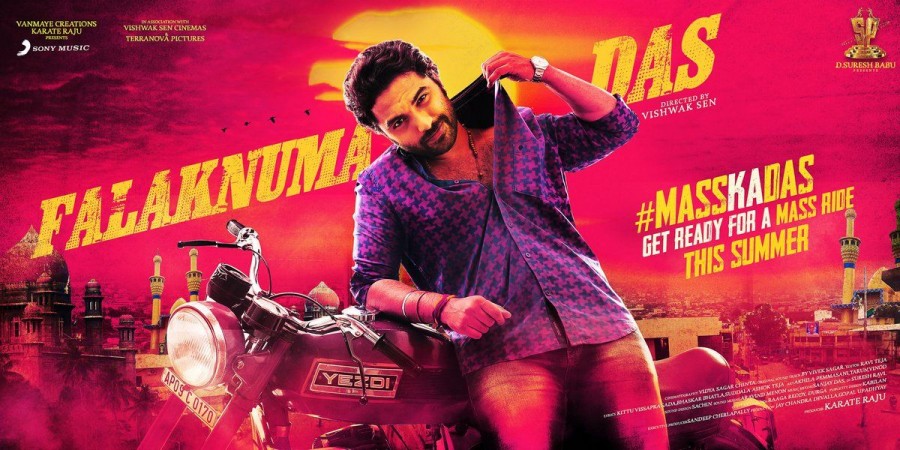
The movie is set in the culturally-rich by-lanes of the old city in Hyderabad. Amidst the aromas of biriyanis and payas, a bunch of kids inspired by the local goon Shankar Anna, form their own ‘gang’. As a school-going Das (Vishwak Sen) proclaims to his friend,” Manani kotte poradu ee Falaknuma lo ne ledu”, a wrong sense of pride, valour and aggression sets in these young minds. They grow up to become small-time goons, often resorting to petty fights and brawls. As they age to their late twenties (the movie transitions between 1997 and 2009), over a couple of love affairs, they get embroiled in a gang war which implicates them in a murder. The rest of the story focusses on how they get out of this mess.

Image result for falaknuma das

From the trailer itself, it was clear that the movie aims at being real and true to the area it is set in – Falaknuma. The camerawork by Vidya Sagar Chinta succeeds in creating a haunting yet beautiful milieu, capturing the chaos and flavours of the old city, right from the montage shots in the opening credits. I really liked the way the festivities of Ganesh Chaturthi and Bonalu were shot, not to forget the drool-worthy shots of food from Shadaab to Ram Ki Bandi. The writing by Vishwak Sen also adds to the authenticity, with the usage of typical Hyderabadi language and accent. Though I felt the dialogues and diction of the actor playing Das’s mother were not authentic. But, nonetheless, it felt good to see an authentic Hyderabadi movie after a long time, the last of which I remember was Nagesh Kukunoor’s ‘Hyderabad Blues’ (Not considering sub-standard movies such as ‘Hyderabad Nawabs’ and ‘Angrez’). The music by Vivek Sagar, including a Hyderabadi rap, blends well with the theme and so does the wonderful art direction, creating authentic households of the old city.

While the movie is strong in terms of technical details, it did not connect with me emotionally. I go back to what I said initially – it was not sure of its intent and faltered in conveying the message. The movie begins with a tone of brawn winning over brain, where school-going kids take fancy to the rough and rugged goons. There are many children who take this route and turn into hyper-masculine men when they grow up, which is a fair depiction. But, the movie tends to oscillate between the story of a bunch of alcohol-loving vagabonds to a gang-war like story, including a murder. Also, the movie made me ponder over the age-old inconclusive ‘nature vs nurture’ debate. Do young minds get infatuated by brawn over brain and turn into toxic humans, who prefer their physical might over their intelligence? It is noteworthy how this has been subtly pushed into the narrative, by showing the transition of young kids into a brawling brood of men.

The romantic angles also do not add much weight, especially the one involving Saloni Mishra as Dr. Zoya. If Taxiwala showed us a much-contrived love story between a taxi driver and a medico, Falaknuma Das shows a smart doctor falling for a small-time goon. Even if they knew each other from their childhood, the equation seems forced and farcical. An interesting observation is that Das is ill-tempered, male-chauvinist and passes snide comments against his girlfriend, but he does not come across as a misogynist. With all the talk about toxic masculinity and misogyny lately, the one scene where he breaks-up with Sakhi (Harshita Gaur) shows his humane side too. As I said, the movie remains on the surface, oscillating between various themes, not helping the audience connect with the point it is trying to make.

As for the performances, director-actor Vishwak Sen gives a great performance as the Hyderabadi lad, trying to start a business while getting into brawls on the sly. His gang of friends have funny banter, but somehow the camaraderie does not liven the screens like it does in Pellichoopulu or Ee Nagaraniki Emaindi. There are few scenes of fun, especially the opening scene in a bar, where Sonu Shanawaz as Filament stands out. Among the rest of the cast, Uttej shows his experience as an actor and makes a mark. Director Tharun Bhascker Dhaasyam leaves an impactful impression as the upright cop. The girls do not get enough screen-time or material and their over-the-top make-up and appearance make them stand out amongst the other real-like characters.

Honestly, I had higher expectations from the film and it left me mildly disappointed. It is a great stride in TFI towards off-beat stories, but somewhere it falls short. Yet, for a young actor to turn director for such a risky film deserves an applause.

My Rating – 2.5/5

Saturday, May 25, 2019

India's Most Wanted - Movie Review

One of the basic tenets of a spy is to be non-descript. Being undercover means being as normal as anyone else around them and blending into the crowd. Director – writer Raj Kumar Gupta’s latest release, India’s Most Wanted, starring Arjun Kapoor in the lead does not seem to believe in the basic tenets I spoke about and only wishes to concentrate on the so-called genius of his protagonist.

Using an all-male-cast, India’s Most Wanted is a fictional retelling of the covert operation undertaken by Indian security forces to nab the mastermind behind multiple blasts in India in late 2000s. The screenplay by Raj Kumar Gupta tries to keep the narrative crisp, by cutting down the chase and getting straight to the point from the word go. The movie begins with a glimpse of Pune blasts of 2008 and cuts to an IB officer in Bihar, Prabhat Kapoor (Arjun Kapoor), who wishes to pursue intelligence received from Nepal about the whereabouts of a dreaded terrorist. Red tape bureaucrats and the complacent North Block in Delhi does not pay heed to his credible information, yet, ‘desh ke liye jaan bhi de denge’ is their motto and wearing their nationalism on their sleeves, Prabhat and his team head to Pokhara in Nepal to validate the intelligence received and nab India’s Most Wanted terrorist!

Image result for india's most wanted

The movie is well-intended, but not well-executed. Raj Kumar Gupta made his debut with a crisp, edge-of-the-seat thriller, ‘Aamir’. The characters were layered, their conflicts seemed real and his narrative had an emotional connect. He followed it up with a decently watchable, ‘No One Killed Jessica’, which worked to a certain extent thanks to its brilliant leads. And then he spiralled into mediocrity. From ‘Ghanchakkar’ to ‘Raid’ to now, India’s Most Wanted. Nationalism and movies with a flavour of patriotism are always lapped up by the audiences, but Raj Kumar Gupta does not let his characters develop or build an emotional connect with us. The characters are one-tone, with a hurried family angle added to each of them to create sympathy. The writing also seems inept, because of the glaring loopholes. A terror suspect is identified based on CCTV footage and in an IB briefing, a character shows his picture and says, “Yousuf kaisa dikhta hai, yeh koi nahi janta”. Er, didn’t you just show a picture, apparently identifying him from a week-old CCTV footage? I laughed my heart out when Prabhat and his team climb on top of a water tank to make a discreet phone call, but his superior discusses the entire covert operation with a ministry official, running through the office lobby! By the same standards, he could have discussed it over a picnic! The opponents in the form of ISI are thankfully not shown as fools, yet, they are incapable and slow.

Much like Ajay Devgn in ‘Raid’, Arjun Kapoor is made to look larger than life, relegating the others to the backdrop. ‘Raid’ was made watchable by the thrills in the writing, complemented by a good actor like Ajay Devgn. But, when you have an inexpressive face carrying your film, the thrills fall flat. Agreed that the movie comes from a John Abraham school of nationalism and does not bear a Raazi-like nuanced craft, but using lofty statements without even slightest of expressions on your face is disheartening and plain sad. The supporting cast is passable, with the exception of the actor who plays their informer in Nepal. He is sorely annoying. Arjun Kapoor, hogging half the screen time and half the screen space (owing to his bulky size), carries a single, straight-faced expression throughout the film. As I said, an undercover agent needs to be non-descript. Here, Arjun stares into the oblivion and looks so morbid that any normal person would suspect him to be a terrorist! In a scene where he is on a phone call with his superior, an unemotive Prabhat says, “Sir, hum nervous hai”, with not even the slightest hint of anxiety. His boss (Rajesh Sharma) replies with a frown and between heavy breathes, “Hum bhi”. You can see the difference between a non-actor and an actor. I wish the director and the producers had also noticed this before signing on a log of wood to act as their protagonist!

While Arjun Kapoor is the biggest liability that this movie carries, it also has some assets which are major plus points. There are moments of suspense in the middle and a few clever moves by the undercover team in Nepal. Also, the cinematography by Dudley captures Nepal in all its scenic glory. Also, with a short run time of about 2 hours and no unnecessary song-and-dance routine, India’s Most Wanted thankfully cuts us some slack.  

The movie is billed as an action thriller, but there is not enough action and the thrills fall flat, thanks to Arjun Kapoor. Even the patronizing dialogues of deshbhakti evoke little emotions. A character in the end says to Prabhat, “Ab wapis bhi aaoge, ya sirf dialogue baazi karte rahoge?”. It almost felt like he was speaking for the audiences.

My Rating – 2/5

Friday, April 5, 2019

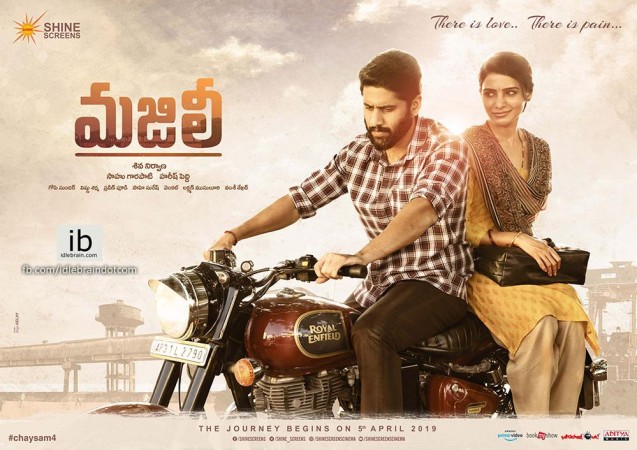
Majili - Movie Review

In 2017, Mani Ratnam directorial Katru Veliyidai (Cheliyaa in Telugu) opened at the box-office. A hardcore love story set against fighter jets and Kargil war, Katru Veliyidai, gave us a woman madly in love with an abusive and unappreciative lover. 2017 also gave us debutante director Shiva Nirvana’s, Nani-Nivetha Thomas-Aadi starrer, Ninnu Kori. The reason I bring these up while talking about Shiva Nirvana’s Majili, is for two reasons – unwavering love of the leads and the dichotomous narrative juggling between a love story and a parallel story of the hero. While Katru Veliyidai had the Indian Air Force punctuating the love story, Majili has cricket injected into its love story. And this dichotomy is the very problem of the movie.

Majili tracks the life of Poorna (Naga Chaitanya) from a teen aspiring to be a cricketer to an alcoholic Devdas. During his formative years as a regional cricketer, he falls for Anshu (Divyansha Kaushik), daughter of a Naval officer. Just like the unauthentic Navy household, the equation between a well-read North Indian Navy kid and an ITI student looks contrived. In the midst of making his way to the Railway cricket team and over the course of a song, they fall for each other. This is the binary nature of the story that I was talking about. The writing by Shiva Nirvana gets uneven – it straddles between a movie on cricket and a love story. This impacts the emotional intensity the love story requires. There are a few endearing moments, such as an excited young Poorna trying to get intimate with Anshu. But, such moments are far and apart, and so the love story feels half-baked.

Related image

As expected, the lovers are separated leading to Poorna ruining his career and taking to vices. Years later, an alcoholic Poorna is married to his neighbor’s daughter, Sravani (Samantha Akkineni), who harbours a strong crush on Poorna since her childhood. Poorna’s strong love and longing for his long-forgotten girlfriend, Anshu, does not let him accept Sravani as his wife. Sravani is a spirited girl, who puts a brave and independent face to the world – she stands up for her husband and goes against her parents and father-in-law. As a girl besotted by Poorna from her school days, she continues to bear his tantrums and be his devoted wife. The writing helps the audiences sympathise with her and question her decision to continue in an unhappy marriage. For a girl who gushes over the sight of this young boy and whose feet she touches as a teen - like a typical Indian pativrata wife - it is believable that her one-sided love made her bear his tantrums. Like Dr. Leela Abraham (Aditi Rao Hydari) in Katru Veliyidai, Sravani displays unconditional love, but does not reduce herself to a slave at the hands of her unappreciative husband (though not abusive, thankfully). I just wish Sravani’s character was introduced earlier on in the narrative, which would have been more emotionally evocative. Again, just when this love story begins to simmer and the audience starts to question the unaffected Poorna, cricket makes a comeback! This time, thankfully, to unite the couple. Also, I found the timelines to be blurry – how old are they? The teenage romance is shown to be around the period when ‘Bhoot’ came out– implying it is set around 2003. But the events that follow make the timeline look slightly unclear.

Keeping the cricket versus love story aside, there are a few moments between the leads that are charming. The awkwardness between a platonic couple married for two years is endearing and one of my favourite scenes is the one with ‘Maata raani mounam idi’ song in the backdrop. Samantha shows restrain and maturity that the character demands, even while appearing to be meek. She complements the story and her husband well. Debutante Divyansha Kaushik is decent, but does not have an impactful role. Making her debut in a cliched girl-hates-guy-turns-into-love template, she gets a rather raw deal. Carrying the film entirely on his shoulder, Naga Chaitanya looks confident and delivers a rather impressive performance. Last year when he tried the formulaic, Sailaja Reddy Alludu, I had opined that he does not have a charismatic personality like NTR Jr or Ram Charan to carry a masala movie on his shoulders. But, Majili seems to be resting comfortably on his shoulders, even during certain unimpressive emotional scenes. This is a marked improvement over his last few movies.

Like Ninnu Kori, Majili also delivers well on the technical departments, especially the cinematography by Vishnu Sharma and the music by Gopi Sundar. Shiva Nirvana, writing and directing again, attempts a mature love story, but falls short of the craft that the likes of Gautam Vasudev Menon have. Like Ninnu Kori, his writing centres around a jilted, staunch lover but he does not let the love story brew enough, often diluting it with other elements (here it was cricket). Giving credit where it is due, his signature dialogues such as ‘Love Letter lo unna peru, wedding card lo radu’, are again in display.

Majili is certainly an enjoyable watch, especially if you are sucker for love stories. But it is not entirely engrossing and evocative.

My Rating – 3/5

Saturday, March 9, 2019

Badla - Movie Review

Before I talk about this week’s crime thriller, Sujoy Ghosh’s Badla, I want to jog your minds to the underwhelming murder mystery from 2017, Ittefaq. Starring Sonakshi Sinha, Siddharth Malhotra and Akshay Khanna, Ittefaq was a retelling of yesteryears film with the same title. The reason why I bring up Ittefaq now, is the similarity in the narrative with Badla – multiple narratives of the same crime. Also, much like Ittefaq, this Amitabh Bachchan – Taapsee Pannu starrer takes the route of complicated twists, just to appear smart. Does it succeed in appearing smart? Not really.

Naina Sethi (Taapsee Pannu) is a young businesswoman, married to a supportive husband and her work. In a mysterious turn of events, she is accused of murdering her paramour Arjun Mehta (Tony Luke). Though she pleads her innocence, she gets pulled into a criminal case thanks to various people with different motives - An Indo-British couple Nirmal Singh and Rani Kaur (Tanveer Ghani and Amrita Singh), looking for their missing son. A lawyer (Manav Kaul) who can go to any lengths to save his client. A powerful investigative lawyer, Badal Gupta (Amitabh Bachchan), who has never lost a case in 40 years. I will refrain from talking about the plot since this is a suspense thriller. But I cannot keep myself from comparing the narrative style with Ittefaq. In my review as well, I had lauded the writing since it was cleverly written to oscillate between different sides of the same crime. Similarly, Badla takes us through multiple narratives of the murder in question – Naina’s story, Arjun’s perspective and Badal Gupta’s investigative analysis. Now, this is a very effective style of writing to keep the audiences hooked, but Badla falls slightly short of striking a chord.

Image result for badla

Sujoy Ghosh’s 2013 superhit Kahaani was also a suspense thriller. Kahaani, which was also written by Sujoy and won him a National Award, had an intriguing style, with the right amounts of chills and thrills. This is where the writing by Sujoy Ghosh and Raj Vasant suffers, with various tropes being deployed towards the climax. Though it is an official adaptation of 2017 Spanish film, The Invisible Guest, I cannot comment how true is it to its original. Another reason why it didn’t strike a chord with me, was due to the inconsistent tonality. The first-half was slower, simmering on the plot, while the second-half suddenly picks up pace, filled with multitudes of twists and turns. Having said that, the writing does not leave many loopholes and all the open ends are fastened well towards the end. (Though I could spot one anomaly. Saving that one for later) It makes for an interesting watch, but not as engrossing as it should have been.

The characters are written well, layering them enough to justify the things they do. Taapsee Pannu as a successful businesswoman, is shown to be powerful and unrepentant, though her demeanor in the opening sequence seemed inconsistent with that image. Nonetheless, she delivers what is expected of her. Amrita Singh, barring her silly banter with her husband Nirmal, is subdued and brings about a sense of mystery to her character. Amitabh Bachchan, as dynamic and captivating as ever, gets witty one-liners and uses his sharp tongue to deconstruct the mystery well. The camaraderie between Naina and Badal builds over the course of the film and adds a tinge of tension to the plot. Malayali actor Tony Luke makes a decent debut but does nothing much to write about. Though his accent seemed slightly off. Another interesting feature was the references to Mahabharat – many of which come up in the conversations between Naina and Badal. Also, Badal refers to the plot of the murder as a ‘Chakravyuh’ (another Mahabharat reference), which takes in Arjun (yes, a Mahabharat reference again). Ghosh seems to have a penchant for the Indian epic, since he used similar references in Kahaani as well.

Badla is a good thriller, with some strong performances and a crisp runtime. I just wish the twists in the second half were more convincing than convenient.

My Rating – 3/5

Sunday, March 3, 2019

Sonchiriya - Movie Review

When a movie opens with a close-up shot of a rotting snake, mauled by flies and ants, it is not only a disturbing scene but also sets the tone of the impending doom that is about to unfold. Director Abhishek Chaubey’s Sonchiriya, is a melancholic tale of the lives of the notorious rebels of Chambal, starring Sushant Singh Rajput, Bhumi Pednekar, Ashutosh Rana, Ranvir Shorey and Manoj Bajpayee in pivotal roles. Based in the late 1970s and as the same era as the award-winning Bandit Queen, Sonchiriya – golden bird – is a sad take on the conflicted lives of dacoits, who not just fight the Special Task Force (STF) but also fight against their conscience.

The movie tracks the life of a dreaded Chambal Baagi (rebel), Man Singh (Manoj Bajpayee), and his army of rebels, including a trusted deputy, Vakil Singh (Ranvir Shorey) and a smart younger lad, Lakhna (Sushant Singh Rajput). Even as they traverse the painfully dry terrains of the Chambal ravines – running away from STF officer, Virejnder Singh Gujjar (Ashutosh Rana) – they have inner conflicts that make them ill-tempered and confused in their pursuits of life. They say their Dharam is to live in the ravines and serve their community – the Thakurs. Justice for them is khoon ke badle khoon. While they appear to be ruthless killers, they really aren’t. Whether it is to offer a shagun ka tohfa to a bride they loot or chant mantra after laying a snake to rest, they are human and seem to have landed themselves in an unfortunate situation of doom. On the run from STF, they bump into a rifle-wielding young woman, Indumati Tomar (Bhumi Pednekar), found running away with a young girl who has been violated. On knowing that she belongs to their cast – Thakurs – they offer to help her reach the nearest hospital, which begins their cat-and-mouse chase through the rivers and ravines of Chambal.

Image result for sonchiriya

On the outset, Sonchiriya may seem like a tale about the fight of bandits against the cops. But the writers, Abhishek Chaubey and Sudip Sharma, deserve the credit for elevating it above the usual good versus evil fight. There is a well-established class and caste divide, that existed in the 1970s (perhaps, exists even today). There are references to untouchability and patriarchy. Neither the self-righteous bandits nor the government serving STF is above the caste divide – for instance, two constables loathe their Daroga (inspector), because they belong to a higher Thakur clan, while their boss belongs to an inferior Gujjar community. Or when a feisty Indumati is offered to be inducted into a band of bandits, she questions their offer since they belong to Mallah community, inferior to her Thakur community. It is such minor details that help them build a narrative which makes one wonder if the bandits and the cops are essentially peas of the same pod!

While it is good to see the problem being layered, it does not really come out well for the lack of empathy. The movie is set at a time, when the gang of dacoits is at the abyss of its survival – they are deranged, lost and dying in frequent encounters. But, to empathize with the characters, their back stories come much later in the film, reducing the ability of the audience to connect with them. The movie has a sad tone, but it is not completely evocative. Also, the movie feels a little too long – much like Abhishek Chaubey’s previous directorial ventures. The first half could have certainly been much shorter, since the movie simmers port-interval. But these aberrations are made up by the stellar performances and the stunning camerawork.  

All the actors in the pivotal roles shine in their performances. They are all rugged, dusty and ooze the right amount of dreadfulness. Manoj Bajpayee and Ranvir Shorey as the gang leaders are terrific. Sushant Singh Rajput and Bhumi Pednekar deliver a strong performance, also getting the dialect right. Sushant Singh Rajput is real and shows the sensible side of the confused bandits, with the ability to be agile and think straight. Playing a woman suppressed by patriarchy and fighting for justice for a young girl, she is the only woman stuck amid a bunch of men. One of the best sequences is the kidnapping scene in the second half, where her tact and Lakhna’s quick thinking save the day for them. Ashutosh Rana, as the man on the side of the law, is a tough cop in-charge to curb the bandit menace, but also has personal scores to settle. He is top-notch, as usual. The cinematography by Anuj Rakesh Dhawan captures the sad and miserable textures of the rivers and ravines of Chambal, adding to the depressing tone of the movie.

Sonchiriya is not perfect, nor is it an easy movie to watch. Also, the dialect may alienate a large section of the audience. Recently, Zoya Akhtar subtly touched a dozen odd issues in Gully Boy. Abhishek Chaubey tries the same with caste & class divide, patriarchy, untouchability and oppression of women. But, this leads to a drag in the narrative and the movie does not evoke enough empathy. In the end, it also becomes a cop versus goons chase film and as the movie says, ‘Choohe ko Saamp khata hai aur saamp ko gidd’ (Rat is eaten by snakes and snakes are eaten by vultures). That pretty much sums up what transpires in this two-an-a-half-hour journey through Chambal.  

My Rating – 3/5