Saturday, July 29, 2023

Rocky Aur Rani Kii Prem Kahaani - Movie Review

If I Had to sum up ‘Rocky Aur Rani Kii Prem Kahaani’ in a single sentence, it would be – This is the least ‘Karan Johar-ish’ film, yet the most ‘Karan Johar-ish’ film that the filmmaker has ever made. Read on to know why.

Set in the milieu of affluent Delhi, Rocky Aur Rani Kii Prem Kahaani (RARKPK), is the quintessential Bollywood love story between an over-the-top Gucci-wearing Punjabi boy, Rocky Randhawa (Ranveer Singh) and a feisty, intelligent TV anchor, Rani Chatterjee (Alia Bhatt). Expectedly, opposites attract and the two fall in love, at which point their completely contrasting families enter the picture. Rocky belongs to a hugely successful business family, whose tough matriarch, Dhanalakshmi Randhawa (Jaya Bachchan) keeps a tight hold on both her family and the business. The Randhawas are the uber-rich Punjabis of Delhi that we have all heard tales about – palatial mansion, jazzy cars and an overbearing sense of ‘sanskaar’. The Chatterjees, diametrically opposite to the Randhawas, are the intellectual elite of Delhi. Their house has a painting of Tagore, walls lined with books and discuss election voter turnout over morning tea. The father is a Kathak dancer and mother is a senior English Professor in Delhi University (and as Rani calls her – is the Shashi Tharoor of the house). As fate would have it, the past of the elderly in both the houses – Kanwal Lund/Randhawa (Dharmender), Dhanlakshmi Randhawa (Jaya Bachchan) and Jamini Chatterjee (Shabana Azmi) – get intertwined forming the base of the love story. To convince their families, Rocky and Rani switch homes to live with the others family. This is where the film scratches more than the surface and touches upon a lot of issues that either side of the families had buried for long. On the periphery, RARKPK is return of Bollywood and Karan Johar to their mainstay – a romantic comedy peppered with family drama. But there is more than what meets the eye.


I started off by calling this movie the least ‘Karan Johar-ish’ film ever. That is because, unlike the usual perception of his movies, this one is not superficial or just candy-floss drama with pretty faces and handsome men flaunting their torsos. The writing by Shashank Khaitan, Ishita Moitra and Sumit Roy brings in layers to the otherwise regular ‘Bollywood Masala’ caper. They touch upon misogyny in our households, delve into compromises that couples make to keep a marriage intact, try to challenge gender roles and play heavily on human emotions. There are some beautiful moments that both the leads get with their families, that make this movie connect with its viewers. On the other hand, it continues to be a typical ‘Karan Johar-ish’ flick – there are massive sets, grandeur in every detail, beautiful faces and gorgeous leads looking their finest best – not even a hair out of its place! Also, like most his films, RARKPK continues to be honest and truthful to its ‘Bollywood Masala’ quotient – numerous nostalgic songs, dialogue references to some of the director’s work from the 2000s and over-the-top ‘naach-gaana’. When Kanwal sings ‘Abhi Naa Jao Chhodkar’, even an octogenarian Dharmender looks charming as ever. Only a true-blue Bollywood fanatic like Johar can make that happen!

The performances are all quite good, especially the actors who played the Chatterjee parents – Tota Roy Chowdhury and Churni Ganguly, who play an intellectual Bengali couple and get to display a wide range of emotions. Their scenes with Ranveer Singh after a Kathak performance and lingerie shopping sequences, respectively, are deeply affecting. Complementing perfectly in both these scenes and in all of the movie is Ranveer Singh. Playing his natural self- in bright, outlandish clothes- Ranveer is perfectly cast as the livewire Rocky Randhawa. Be it the Punjabi accent or the dance moves or the emotional scenes, Singh is brilliant. Matching his energy is the calmer, yet powerful performance by Alia Bhatt as Rani Chatterjee. She is fierce, strong and unabashed – right from her introduction scene where she ticks off a politician to her numerous face-offs with the Randhawas. Alia Bhatt does not let her petite frame come in the way of the feistiness that her character demands. Among the veterans, Jaya Bachchan – making a return to the large screen after a hiatus- is very good both in her dialect and performance. I wish her character had a better arc, since it gets an unconvincing end. Multiple National Award-winning actress, Shabana Azmi, delivers her roles well. Dharmender, at 88, is mostly mellow but deserves an applause for still trying to charm his leading ladies and the viewers alike.

RARKPK does come with its flaws. The writing falters post the interval, where some of the issues with the family members seem contrived. Some of the sub-plots such as the one involving Rocky’s sister, Gayatri, or his mother, Poonam, seem forced and not add much to the plot. The climax also seems rushed, as if the makers suddenly became mindful of the duration and decided to speed up. But all said and done, the movie does have some beautiful moments and a typical Bollywood love story at its core.

One of Johar’s most loved directorial, ‘Kabhi Khushi Kabhi Gham’ (2001) had a tagline – It’s all about loving your Parents. RARKPK, 22 years later, appears to be Johars adaptation to today’s day & age and should come with a tagline – It’s all about loving your parents, albeit with some rebellion!

My Rating – 3.5/5

Saturday, September 25, 2021

Love Story - Movie Review

Over the last few months, movie watching experience has changed drastically owing to the pandemic. With cinemas shut, OTTs became our entertainment destinations. Now that theatres are opening again, one needed a good reason to take the risk and be back in theatres. And what better reason than a Sekhar Kammula – Sai Pallavi film (after the stupendous success of Fidaa, 2017). Add a not so conventional lead pair, Naga Chaitanya, and you have created enough intrigue to get your seats filled. But, does Sekhar Kammula’s much-awaited ‘Love Story’ deliver on its hype and expectations? I would say it almost does, but misses the mark by a whisker!

Set in modern day Secunderabad, Love Story begins with the harsh childhood of the protagonist, Revanth, raised by his widowed mother (Eashwari Rao) in Armoor, Nizamabad. Right from his childhood, Revanth and his mom internalise caste discrimination and accept it as their reality, just as many of the lower castes in this country have. Strong-willed and hard-working, Revanth grows up to be an ambitious and industrious young man. The adult Revanth (Naga Chaitanya) lives in Secunderabad and runs a modest Zumba centre, resolute to expand and grow his business. Equally ambitious and determined, small-town-girl Mounica (Sai Pallavi) comes to Hyderabad with the quintessential ‘software dream’. Unlike Revanth, Mounica belongs to an upper-caste family. But, hailing from a small-town, with a not-so-great academic background, Mouni (as she is fondly called) struggles to get a job. As fate would have it, their paths cross and Mouni joins Revanth, first as his business partner and then the ‘Love Story’ begins.


The story, screenplay, dialogues and the direction are by Sekhar Kammula, just as most of his previous movies, largely making it a one man show behind the camera. Like most of his previous films, he gives us strong-willed, righteous and independent lead characters, especially the female leads. Much like Rupa in Anand (2004), Sita in Godavari (2006) or most-recently as Bhanumathi in Fidaa (2017), Mounica is the driving force in the movie. And such strong characters have become Sekhar Kammula’s trademark and something we all love. But, unlike his earlier outings, Mr. Kammula has attempted to skim through multiple themes in a single movie. On a larger canvas, he starts to paint the film in the tones of caste-based discrimination, societal divide and the fights for one’s ambitions. On a micro level, he also touches his canvas with lighter strokes of gender inequality, child abuse and communal oppression. These are quite diverse topics and inter-weaving them seamlessly is a daunting task, which Mr. Kammula tries commendably, especially in a mainstream film. But I wish these themes were tied together better, instead of mildly feeling like a confused concoction as the movie jumps from one social evil to the other.

This reminds me of the review of Zoya Akhtar’s Gully Boy (2019) by film critic Sucharita Tyagi (Film Companion). Gully Boy touches many a societal evil and passes strong commentary on them, effortlessly! Ms. Tyagi describes this as “Watching Gully Boy is like seeing a European Renaissance painting, where each stroke & shade of colour speaks a different story”. And this kind of finesse is what I really craved for in Love Story. Not just Zoya Akhtar, but there are many directors today who delivered on effectively stitching together multiple unconnected themes in a single movie, such as Venkatesh Maha in C/O Kancherapalem (2018), Alankrita Srivastava in Lipstick Under My Burkha (2016), Vetrimaran in Asuran (2019), Amit Masurkar in Newton (2017) & Sherni (2021) and Nagaraj Manjule in his Marathi movies, especially Sairat (2016). Mr. Kammula’s efforts must surely be applauded, with hopes of a better-stitched movie the next time.

Sairat, an ill-fated love story between an upper caste girl and a lower caste boy, comes closest to the central theme of Love Story. So does the recent sleeper-hit, Uppena (2021). But what Love Story brings to fore in mainstream Telugu cinema is its honest and real performances. Among the supporting cast – Eashwari Rao as Revanth’s mother, delivers a warm and endearing performance. Rajeev Kanakala, as the evil upper-caste uncle to Mouni, is effective in a negative role. Naga Chaitanya is good as the boy yearning for a breakthrough and delivers a commendable performance, devoid of toxic masculinity. He acts well, though he seems a bit woody in the emotional scenes. Sai Pallavi, yet again, is a scene-stealing, natural performer. Be it her raw comic timing, emotional scenes or flawless dance performances, she is an outstanding asset to the film and Mr. Kammula utilises her full potential. (Though I didn’t quite buy that a Nizamabad-bred girl dances flawlessly on contemporary dance forms without any training :P – cinematic liberty, I suppose) And yes, both the leads & most of the cast gets their Telangana accent right. 😊

Love Story may be flawed, but it does pick up some right conversations in mainstream Telugu cinema. Unlike Uppena, where the caste divide was largely muted, Love Story brings the divide more into focus – including the caste-based difference in places to get one’s haircut to the places where one is laid to rest! It also gives us a warm and endearing love story shrouded by various societal problems. I just wished it all came together a little more seamlessly.

You can watch Love Story in theatres.

My Rating – 3/5

Saturday, September 12, 2020

Cargo - Movie Review

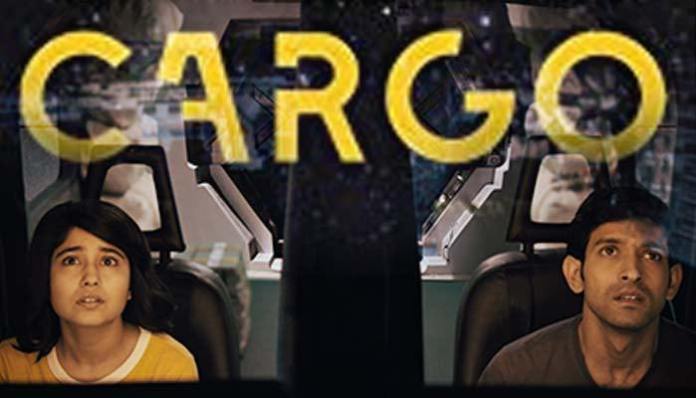
One of life’s most fascinating and curious facets has been life after death. There have been various studies and research on what really happens after death? Is there an afterworld where humans are re-wired and sent for rebirth? Is there a mythical ‘Yamalok’ where all this happens? Writer-director Arati Kadav’s Netflix release, ‘Cargo’, takes this promising premise, gives it Sci-Fi undertones and yet, gives us an emotional tale, told through the eyes of two rakshasas (demons), Prahastha (Vikrant Massey) and Yuvishka (Shweta Tripathi).

Set in the year 2032, Cargo shows an imaginary world where Manushya (humans) and Rakshasa (Demons) sign a ‘peace pact’. The Rakshasa’s establish a Post Death Transition System (PDTS), through a network of spacecrafts called ‘Pushpaks’, orbiting around the earth and helping the dead transition to their afterlife. Calling themselves the modern-day descendent of Yamraj, the god of death, Pushpaks have ‘agents’ who ‘transition’ manushya after death to their next lives. Commanding one such Pushpak is Prahastha, who is assigned an assistant, Yuvishka, to take on their mundane tasks of handling the dead & the deceased.

Cargo (Netflix) review - Indian Link

I couldn’t help but compare the lives of Prahastha and Yuvishka to that of doctors we see around us. Usually, doctors tend to become unfazed, unmoved and unaffected by death and pain, since this becomes a part of their lives. The negativity of suffering and death does not emotionally move them, as easily as it affects a commoner. Prahastha, having manned his Pushpak for ages, is one such unremorseful ‘doctor’, who heals, rehabilitates and transitions the dead to their next lives. In sharp contrast, Yuvishka, like a medical intern, finds it difficult to handle her emotions and inner turmoil. Her compassionate heart aches for the deceased and struggles to remain objective, unlike her boss. How does she hold herself up for the profession she has chosen? Would the arrival of a companion after ages make Prahastha melt his stone-cold heart? Cargo is all about that.

Minutes into the viewing, I could also see similarities with the 2016-Hollywood Sci-Fi drama, ‘Passengers’. Much like Chris Pratt and Jennifer Lawrence, there are only two characters stuck in the outer-space in Cargo. However, there isn’t much of a romantic angle here – the leads remain largely platonic. Cargo is a movie about emotions, characters and in a way, trying to unravel the baffling mystery of life after death. Hence, we do not get to see hi-fi gadgets and equipment. In fact, owing to the small budget probably, the set design and scenes in the spaceship are quite primitive and look underwhelming. Speaking of the spaceship, it’s cleverly been named ‘Pushpak’ after the mythical spacecraft owned by another Rakshas, Ravana, in the mythological tale of Ramayana. Arati Kadav also takes clever (and fascinating) writing tropes in giving Rakshas’s distinct traits –they have various powers like the X-Men, their news is from the Paatal Lok and a singing sensation is named Surpanakha, after another mythological demoness. All this add to the quirk element of this make-believe world.

Having said that, Cargo isn’t a Sci-Fi extravagance. It is about the battle of emotions of its leads. On one hand, it is about Prahastha’s realisation that life is beyond his mundane work. On the other, it is about Yuvishka’s realisation that death is not the end of a person’s story, it continues, probably in another birth. The essence of the movie is beautifully explained by their handler from the base station, Nitigya (Nandu Madhav) in a scene. When Yuvishka asks him what his superpower is, he says that he can disappear upto 86%. When she questions its purpose if he cannot disappear completely, he replies, “Life mein kuch be completely disappear nahi hota”. This kind of sums up what Prahastha and Yuvishka learn towards the end of the movie – death is an aberration and not an end. Lives do not disappear completely (at least that’s what the movie’s writers seem to have deciphered).

Sci-Fi genre has largely been dominated by big budget extravagant films, even in the Indian context. With mammoth budgets, these films usually lean on cutting-edge technology, awe-inviting action and stunning visuals. Even Indian Sci-FI drama, from the awfully painful Love Story 2050 (2008) to the recent Telugu-Sci Fi, Antariksham 9000 KMPH (2018), concentrate on science and technology-driven dramas. But Cargo comes as a refreshing change and deserves an applause for its quirks and innovation. Apart from writer-director, Arati Kadav, a deserving mention of the great camerawork by Kaushal Shah and sharp editing by Paramita Ghosh. I wish the set designs were better and not as cardboard-like as they appear. I suspect the tight budget to be the reason behind it. Also, the narrative seems to lose a bit of a steam in the second half.

Like Passenger (2016), Cargo relies majorly on two actors – its leads. Vikrant Massey is terrific as the loner Prahastha, who experiences a change of heart once he experiences companionship. Playing his junior and new-found companion, Shweta Tripathi is nicely cast as the young, ambitious and compassionate new ‘agent’. Though their relationship remains unsaid and platonic, they share a warm chemistry. Nandu Madhav, playing their handler from the base station is nicely cast and makes an impact despite appearing only through a 14-inch monitor throughout the film.

After watching Malayalam genius at display in ‘C U Soon’ (2020) last week, I wondered if the Hindi film industry is headed anywhere close to similar innovation and story-telling. Cargo may not be a flawless attempt, but is certainly a laudable step towards interesting and innovative story-telling in Hindi cinema, which we do not see too often.

My Rating – 3.5/5

Thursday, August 13, 2020

Gunjan Saxena - Movie Review

Gunjan Saxena: The Kargil Girl' to release directly on Netflix ...

Over the recent past, Bollywood has churned out quite a few movies with the armed forces in the back drop, kindling a fervour of ‘josh’ in a country that suddenly turned desh-bhakt over the last few years. Debutante director Sharan Sharma’s Netflix release, Gunjan Saxena – The Kargil Girl, surprises you here. While the name sounds like yet another story of valour and patronization of our armed forces, this Janhvi Kapoor-starrer, on the contrary, is the story of a woman trying to break through a man’s world.

The movie traces the journey of a young girl, Gunjan, born to an Army Officer in the 70s. Raised in a patriarchal society, Gunjan’s dreams and ambitions are given a flight by her extremely supportive father, Lt Col Anup Saxena (Pankaj Tripathi). In a world where misogyny is normalised and expects girls to be ‘controlled’, Gunjan grows up with the sole aim of being in the skies – she wants to be a pilot! And the writers and production designers ensure that we know this well – her world revolves singularly around airplanes and being airborne. She wears aviators as a kid even while watching movies, wind chimes in her room are the shape of airplanes and she never misses to run when a plane passes over. She is obsessed about being a pilot! Cut to a few years later, a 21-year old Gunjan (Janhvi Kapoor) becomes the first woman to be a commissioned as a pilot in the Indian Air Force.

Now, this is where the movie surprises by not becoming a war film, which it could have easily become. It remains Gunjan’s story – her trials & tribulations through her initial days in the forces. In a crucial scene, we see a nervous Gunjan tell her dad she only wanted to fly and doubts her ‘desh bhakti’. To this, her dad brilliantly replies – Imaandaari se karo toh yeh bhi desh bhakti hai. She takes this as her motto and puts in her heart and soul to beat all odds – from not finding women’s restrooms to struggling as the lone female pilot surrounded by men. The tough portrayal of IAF instructors and training feels real and believable. Even Gunjan’s role in the Kargil War is shown subtly, without unnecessary heroism until the sequence in the climax.

While it steers clear of war film clichΓ©s (there are no ‘How’s the josh’ moments, thankfully) and jingoism, the writers Nikhil Mehrotra and Sharan Sharma resort to some unnecessary cinematic liberties. While it is understandable that society in the 80s-90s was conservative and expected girls to be a certain way, the negative portrayal of the Air warriors was uncalled for and was unconvincing. The men in the armed forces are known to be extremely chivalrous, dignified and are taught to respect women. But the men in the movie have been written as misogynists and opportunists, just to add to cinematic masala to Gunjan’s struggles. Now, this is a story based on real-life and I am not sure how much of it has been altered for cinematic effect, but as someone who has first hand experience of IAF, this negative portrayal seemed unnecessary and far-fetched.

Keeping the cinematic liberties aside, the other cinematic tropes have been used effectively – Music by Amit Trivedi compliments well and the camera work by Manush Nandan recreates a world of the 80s and 90s well. In terms of the performances, Manav Vij as the commanding officer is the only one who looks convincing as an IAF pilot. Both Vineet Kumar Singh and Pankaj Tripathi, playing officers from the Armed forces, fall slightly short of looking dynamic and convincing as officers. Pankaj Tripathi, as the soft-spoken father shines in his father-daughter scenes with Gunjan. In a scene during the latter half when Gunjan calls her father, see his glittering eyes filled with pride – a testimony of his acting prowess. Angad Bedi looks the part as an Army officer, but gets a one-tone character. As Gunjan’s elder brother, he is only pulling her down, trying to protect her and kill her ambitions in the bargain. In the titular role, Janhvi Kapoor makes a good attempt but succeeds only to a certain extent. Like I said in my blog on ‘Dhadak’, she falters when she is required to give a wide range of emotions. She is fine as the bubbly daughter and the shaken sole-woman-among-the-men, but cannot convey Gunjan’s angst and frustration effectively. See her in a crucial outburst scene with her fellow officer - she tries hard to appear effective but falls short, especially in dialogue delivery.

All said and done, Gunjan Saxena is an inspiring story. The fact that it steers clear of unnecessary jingoism and remains a tale of a woman breaking the glass ceiling, is commendable. If you ignore the slightly negative portrayal of men in the armed forces, Gunjan Saxena makes for a good watch.

My Rating – 3/5

Sunday, July 26, 2020

Dil Bechara - Movie Review

At the beginning of Disney+ Hotstar’s ‘Dil Bechara’, the protagonist, Kizie Basu (Sanjana Sanghi), sums up the movie for us – Ek thha raj, ek thhi rani, dono marr gaye, khatam kahaani. In the Hindi screen adaptation of ‘Fault in our Stars’, we get a narrator in Kizie, who suffers from thyroid cancer, giving us a glimpse of her morose life, until the flamboyant Immanuel Rajkumar Junior AKA Manny (Sushant Singh Rajput) enters it.

This is not the first time we have a movie with terminally-ill protagonists. From Anand to My Brother Nikhil or Guzaarish, we have had makers tell us stories of diseases and the deceased. Dil Bechara comes closest to Mani Ratnam’s 1989 hit, Geethanjali. Thematically, both the movies have the same beats – terminally ill protagonists, one of them has a zeal for life and helps the other one come around. However, Geethanjali was in a much lighter vein and Mani Ratnam downplays their agony and pain, which is more pronounced in Dil Bechara. Other way to look at it – probably Dil Bechara has a more real take on the lives of the terminally ill – their bouts of health problems, their inner battles and mental turmoil. So, we get to see a sombre Kizie always walking around with ‘Pushpinder’ (her oxygen cylinder), her fluctuating health and recurring cancer counselling sessions. Her sullen life is lit up when Manny, a patient of osteosarcoma, enters her life and brightens it up.

Dil Bechara' review: Sushant Singh Rajput steals the show in his ...

Manny has a completely contrasting take on life. Belonging to a rich household (much of which we are not told about) and probably being able to afford best of medical care, he has a more positive approach towards life. A chain ‘smoker’, he likes to hold cigarette in his mouth without lighting it. He says its metaphorical – something that causes cancer has been rendered useless by a cancer victim. He is a Thalaivar AKA Rajinikanth fan and wishes to fulfil his best friend’s dream of directing a Bhojpuri flick. Kizie, who frequents funerals as a hobby, is chosen as his ‘leading lady’ in this ‘movie’ being shot on a handycam. Expectedly, he manages to make Kizie look at life better and fall in love with him, ending up romancing in Paris. But, does Kizie’s opening story - Ek thha raj, ek thhi rani, dono marr gaye, khatam kahaani - come true? Is their story ephemeral? Watch to find for yourself.

Dil Bechara, with a crisp running time of 100 minutes, does not thankfully meander into unnecessary subplots. We do not have cliched sad drama involving the families – everyone is unbelievably nice. But, unlike Geethanjali which focussed more on their love story, Dil Bechara takes to the tragic pain that the protagonists go through, making it a not so easy watch. Coupled with the collective pain we have been experiencing since the untimely death of the lead actor, the movie feels a lot heavier than it intended to be. For a movie title hinting at a love story, this required to be more on the romantic side. (Except a glimpse in the song ‘Khulke Jeene Ka’, not much of it is seen). But it ended up being a movie on life and death.  

A R Rahman’s music compliments the theme well, though ‘Main Tumhara’ - the track that brings them together and acts as a major plot point, could have been better. Performance-wise, Saswata Chatterjee, Swastika Mukherjee and Sahil Vaid provide good support to the leads. Sanjana Sanghi is promising in her maiden lead attempt and uses her petite frame to transition from an awkward college student to a girl madly in love. Sushant Singh Rajput, in his last acting stint, is good as the goofy Manny, giving us laughs and then takes us through his pains with equal conviction.

But, as everyone has been saying (and warning), Dil Bechara does not deserve to be ‘critiqued’ and ‘rated’. It is a tribute to Sushant Singh Rajput and I would also leave it at that (which means no rating). Watch it, but beware of tearing up (mostly because of SSR, the actor and not the character).

P.S: I admit it wasn’t easy watching this movie objectively, after the sad turn of events in the past few days and the cacophony that followed. That is why I decided to sleep over it to clear my thoughts and be able to pen them better. It is ironic that a young star, with promising acting skills, could not take inspiration from his zealous character, Manny. While watching the movie with a mind shrouded by the recent unfortunate events, one may find the dialogues sting at you. When Manny says ‘hum kab marte hai yeh hum decide nahi karte’ or when he begs Kizie ‘Can we pretend am not dying aur kahi nahi jaa raha’, you wonder if only Sushant Singh Rajput, the actor, had taken these words to reinforce himself.

Wednesday, June 24, 2020

Bulbbul - Movie Review

In a crucial scene in Netflix’s latest release ‘Bulbbul’, we see the younger daughter-in-law of the house, Binodini (Paoli Dam), console a shaken ‘badi bahu’, Bulbul (Tripti Dimri), ironically, with dark and disturbing words. In the end, Binodini says, ‘Bade haveliyo mein bade raaz hote hai’ – which sums up this seemingly predictable, yet intriguing movie with disturbing undertones. Written and directed by Anvita Dutt, Bulbbul is a drama in the guise of a thriller, which challenges patriarchy and the state of women in Bengal Presidency in the late 1800s.

Bulbbul opens with a wedding in 1880s, where a child bride, Bulbul, is married off to a much older man. The groom – Bade Thakur (Rahul Bose), is a feudal lord with a mentally unstable twin brother, Mahendra, his suspicious wife, Binodini, and a teen brother, Satya, older than his newly wedded ‘bride’! The kids grow up playing together, with Bulbul being fond of Satya, more than her husband. This seemingly platonic relationship is broken when Satya leaves for London to study law (reminds of Devdas? Feudal lords, London, barrister). When he returns five years later, his home has changed – Bade Thakur has left the house, his twin brother is murdered and rumours of a dreaded ‘chudail’ killing men in the village. While he tries to unravel the mystery behind these deaths, the normalised patriarchy, male chauvinism and oppressive culture of the day come to the fore.

Bulbbul - Wikipedia

As evident from its trailer, Bulbbul is a spin-off on the fairy tales children grow up on. Unlike princesses and fairies, Satya and Bulbul have their world filled with demonic characters hunting evil. The murk that follows is majorly created by a shrewd & acerbic Binodini and unfortunate misunderstanding between the characters. Behind the grandeur of their haveli and shiny jewellery, they all hold dark secrets, stashed away from each other. Their affairs and dalliances are hushed, just as the bruises on their feet. As Binodini says, ‘Bade haveliyo mein bade raaz hote hai. Chup raho’. Along with bade raaz, social evils against women and their ill-treatment is normalised. But, will the ‘chudail’ obey the social construct and stick to the norm of ‘chup raho’? The mysterious murders seem to say otherwise. Bulbbul is as much a thriller as it is a commentary on the mistreatment of women.

The movie has a sharp runtime of 90-odd minutes and has been written well by Anvita Dutt, moving back and forth in time. However, the storyline is slim and one can predict the climax, which is a flaw. But I think the makers wanted to highlight the trials and tribulations of women – from child marriage to their place in the social construct, a lot of issues have been touched upon. And may be that is the reason why the thriller plot is a plain vanilla variant, and not developed intricately like a gourmet flavour.

Shot in tints of red, greys and burning fire, Bulbbul is visually an experiment which reminds us of the genius photography of Tumbbad (2019). Shot stunningly by Siddharth Diwan, the red tints symbolise Kaali – red, raging and thirsty for blood. After the rage reduces, we see the movie in tints of greys and blues, symbolising tranquillity. Or, probably, hinting at the approaching rage. A shoutout to the costumes and production design by Veera Kapur and Meenal Agarwal, for creating the grand and dark Bengal of the 1880s. Music by Amit Trivedi is sublime and goes well with the intriguing structure of the movie. Despite its predictability and flaws, Bulbbul is a brave attempt, especially for bringing leads in tones of grey. Even as we think of Bulbul as a docile, demure young girl, her mysterious smile holds dark secrets within. See her in the scene with a widowed Binodini – even as Binodini remains sugar-coated and throws a barb at her, Bulbul, does not take it back lying & stings harder. Talking of Binodini, while we see her as cunning, opportunistic and manipulative all along, we realise in the end that her circumstances and marriage to an unstable man make her the way she is. The only man in the household who appears mildly kind and understanding towards the women, Satya, actually turns out much like the other men – suspicious, jealous and trying to do ‘the man’s job’. On the contrary, Bulbul’s doctor and confidante, Sudip, is a more accommodative and supportive man – probably a rarity in those days (probably a rarity even today!?). It is these characters and their changing colours, which makes the movie intriguing.

Tripti Dimri is spectacular as Bulbul. She beautifully uses her docile face and smile to hide her pain and angst. She is complemented well by an equally unassuming Avinash Tiwari, as the friend-cum-estranged-brother-in-law. As the man in a patriarchal society, he grows to be a younger version of his brother and Avinash manages to exhibit this transition beautifully. Paoli Dam and Parambrata Chattopadhyay also perform well in their respective roles. But, the best performance here (apart from Tripti Dimri) happens to be of its producer, Anushka Sharma’s. While ‘Clean Slate Filmz’ has been churning out off-beat stories since its inception (NH10, Phillauri), they have upped their game in OTT space with a hard-hitting ‘Pataal Lok’ last month and a brave attempt in Bulbbul now.

Bulbbul has its flaws – biggest of which is its predictable nature. But the uncomfortable subplots and feminist angle do make it a relevant & interesting watch.

My Rating – 3.5/5

P.S: I had to give the additional half for the sheer cinematic vision and efforts put in by the technical crew.

Friday, June 19, 2020

Penguin - Movie Review


Watching debutante Eashvar Karthic’s, ‘Penguin’, instantly reminded me of Mysskin’s ode to Alfred Hitchcock – ‘Psycho’ (Tamil – 2020). While the plot and setting of this amazon release are different, there are quite a few similarities in the craft and subtexts, especially the handling of the gore. Also, it has a raw weirdness seen in movies by ‘off-beat’ directors, such as Mysskin. Named after a character from a kid’s story book, Penguin, headlined by a spectacular Keerthy Suresh, is a thriller about a mother’s unshaken resolve to find her missing son.

Like ‘Psycho’, Penguin is set in an eerie, misted-by-fog area (its’ Kodaikanal), has a recurring Christian cross and multiple references to Mother Mary, a not-so-subtle subtext of primal mother, under whose shadows we see an equally determined mother, Rhythm (Keerthy Suresh), looking for her lost son, Ajay (Master Advaith). Rhythm and Raghu (Lingaa) are a married couple living in a sprawling house in Kodai with their 2-year old son, Ajay, and a Labrador, Cyrus. Their child goes missing and years later, while Rhythm is pregnant again, the poor boy is found in the dark forests that hold the secret behind his disappearance and possibly, his captor. The rest of the story is how Rhythm tries to stitch the pieces together to unravel the mystery.

Penguin Movie Review: Some chills and many cheats in this ...

Penguin has a promising start, with the brilliant camerawork by Karthik Phalani, that captures the hills and valleys in misted hues of blue and grey, which add to the thrill. The makers use their shots to also convey their protagonist’s frame of mind – convoluted top shots and a reversing waterfall as Rhthym drives through winding roads, as she regresses to her past. This is complemented by the music of Santhosh Narayanan, which does not merely create cheap-thrills, but provides a rather complementing background score. Again, I invoke ‘off-beat’ Mysskinism here – when Rhythm and Raghu spot shoes and clothes of (presumably) their son, the music is not sad or emotional. On the contrary, it is positive (almost celebratory) with accordions playing away. This signals that though we may be staring at an impending doom visually, but there may be more than what meets the eye. Also, some details are well thought of – Ajay’s nomadic mental & physical state upon returning from captivity and Rhythm’s presence of mind in most challenging situations.

Technically, Penguin has a lot of strengths and deserves a pat for achieving these through mostly newcomers and novices. However, it falters in its writing and casting (barring its protagonist). The writer-director Eashvar Karthic chooses a formulaic ‘vengeful mother’ theme, which we have seen umpteen times, most recently in Sridevi’s Mom (2017). Though he sets out promisingly, he meanders into unnecessary tropes for thrills and gives us a contrived climax. While he jumps back and forth seamlessly in time, he does not develop characters well enough for us to relate to them in the unexpected (and disappointing) climax. In fact, the Labrador – Cyrus, gets better arc and space in the narrative than Rhythm’s husband. Speaking of characters – the casting is the other let down here. Except for Keerthy Suresh, who literally carries the film on her able shoulders, the supporting cast are one-tone and perform badly at their already poorly-written roles. Also, the screenplay has some loopholes such as Rhythm’s recurring dream, which remains unexplained.

Right from the posters and promos it was evident that Keerthy Suresh will do all the heavy lifting. And boy, she does it so well! She is convincing as a mother with unflinching conviction to find her son and does not lose steam for one bit. It’s so good to see her utilise her potential and makes me wonder why does she choose abysmal and inconsequential roles like Nila in Vijay’s Sarkar (2018). As Rhythm, she is not a superhero and is aware of her fallacies. It is her convincing portrayal that makes Penguin a decent watch.

Penguin had a lot of potential, but the convoluted second half culminating in an unconvincing climax, leaves you unsatisfied. It’s got enough thrills and gore, suitable for a mature OTT audience. Add a terrific Keerthy Suresh and you should be able to sit through.

My Rating – 2.5/5

Saturday, June 13, 2020

Gulabo Sitabo - Movie Review

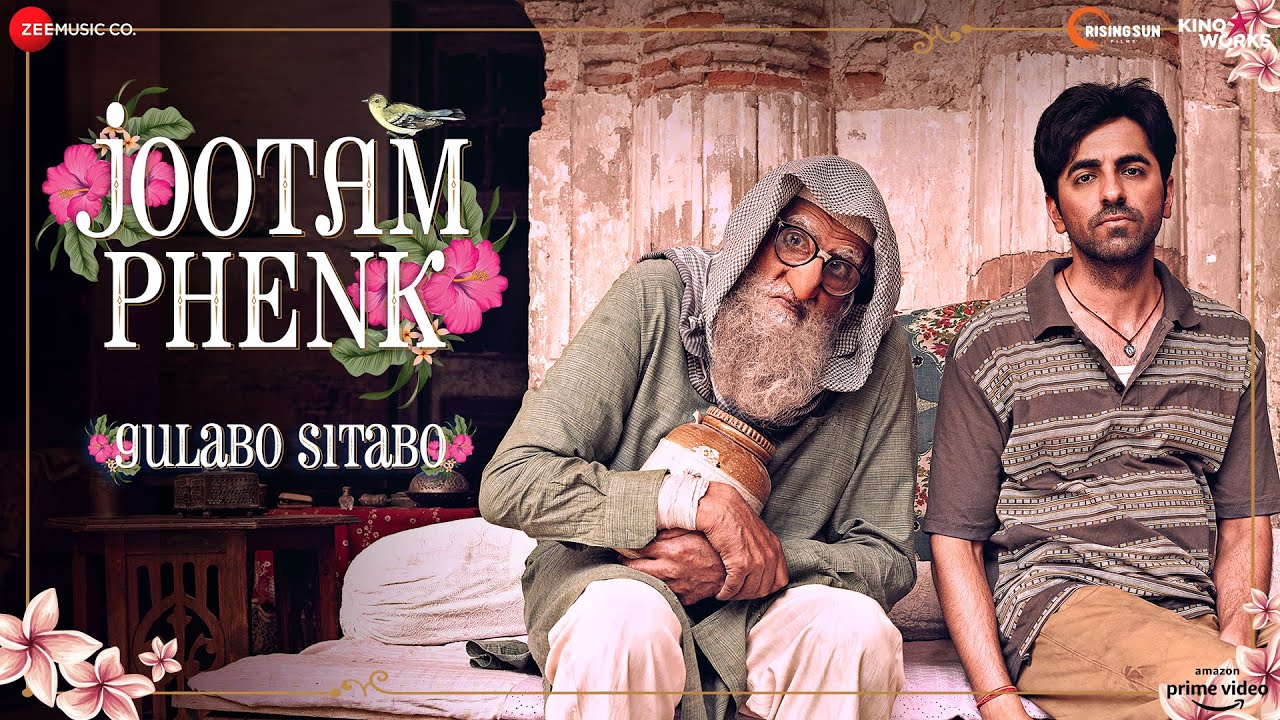
Director Shoojit Sircar's 'Gulabo Sitabo' opens with a roadside puppet show in Lucknow, featuring two quarrelsome puppets - Gulabo and Sitabo. The puppeteer sings - 'Sitabo phul gayi, Gulabo phul gayi' (Sitabo is flaring up, Gulabo is flaring up) about their conflict. Parallely, we get a glimpse of an old & rusty man, Mirza (Amitabh Bachchan), selling trivial things like light bulbs and cycle bells in scrap. The petty old man walks back to a sprawling but dilapidated haveli - Fatima Mahal. Owned by Fatima Begum (Farrukh Jaffar) and managed by Mirza, the dingy 'mahal' (one cannot really call it that) has a bunch of tenants, who have inhabited the place for decades but pay a paltry 70 bucks as rent. Among them, Baankey Rastogi (Ayushmann Khurrana) makes for a perfect Gulabo to Mirza's Sitabo - the two are always at loggerheads with either one trying to outwit the other.

At a superficial level, Gulabo Sitabo is a landlord-tenant saga we have seen in various movies, the last of which I can remember was Priyadarshan's 2001 flick, 'Yeh Tera Ghar Yeh Mera Ghar'. But, Gulabo Sitabo goes deeper - it also throws light on the sad and deprived lives that some of the erstwhile royal families lead in India, of which Fatima Begum and Mirza are fading examples. 70 years after Indian independence, the royalty and the pauper live together and both run after meagre alms. The movie also shows us how the simpletons of our country are taken for a ride by street-smart people and probably, their own government. When Mirza sells petty things form the 'mahal' and faints at the mere sound of a large sum of money, you think he is a miser looking to make money - by hook or crook. When Baankey disses his landlord and escapes from paying rent, you think he is being unfair to his shrewd but elderly landlord. As the knots open, one realises that our protagonists are not bickering Gulabo-Sitabo, but are just the victims of their circumstances and money (or the lack of it) has made them the way they are. While the theme and intent is noble, Gulabo Sitabo falters in conveying the message to its viewers.

Jootam Phenk -Gulabo Sitabo| Amitabh Bachchan, Ayushmann Khurrana ...

Shoojit Sircar collaborates with his successful writer partner, Juhi Chaturvedi. Sircar-Chaturvedi combo are known for their quirky stories, realistic relationships and endearing characters. Much like the achingly beautiful, October or the gastronomic fun, Piku, Gulabo Sitabo is a slow and simmering tale which requires its viewers to immerse in their world. I felt the biggest problem here was the OTT release. With streaming platforms, one has access to a variety of content at their fingertips. For a movie being streamed at home, it is very important for it to be effective and interesting over the various distractions at home. To savour and relish something like Gulabo Sitabo, one needs an all-consuming attention and closed environment which can only be experienced in a theatre. I think this is where Gulabo Sitabo did not connect with me as much as I would have liked it to. Having said that, Gulabo Sitabo was meant to have a theatric release and probably that's why it was not tailored for streaming platforms. Yet, it remains a decent watch, if not as delightful and endearing as Sircar-Chaturvedi's previous works.

What works for the film is its cast and their on-point performances. Amitabh Bachchan is brilliant as the annoying and aging Mirza, hated by everyone yet your heart tugs at him towards the end. Right from his gait to his urdu to his look, he transforms from the BigB that we know, to a completely different person. Its baffling how he plays a Bhaskor in Piku and a Mirza in Gulabo Sitabo with such ease & elan. Ayushmann Khurrana (with a lisp) is nice as the uneducated and gullible bread-winner of his family. His character, along with the other gullible tenants and Mirza, show us how the needy are exploited at the hands of those in power. The rest of the cast fit well into the narrative especially Vijay Raaz and Brijendra Kaala as the manipoulative government official and lawyer, respectively. Special mention of Srishti Shrivastava as Guddo, Baankey's educated, sharp-tongued and smart sister. The cinematography by Avik Mukhopadhyay paints Lucknow vividly and creates a gloomy yet endearing Fatima Mahal for us. The stunning visuals are supported well by the folksy tunes by
Shantanu Moitra.

Honestly, I really wish Gulabo Sitabo worked better for me, having been a fan of Juhi Chaturvedi's writing and Shoojit Sircar's voice as a director. Probably it required an immersive movie experience that only theatres give us and it did not connect well when the medium changed from a big screen to a TV. But, all said and done, Gulabo Sitabo still deserves a watch for its delightful performances and a quirky story-line.

My Rating - 2.5/5

Saturday, May 16, 2020

Paatal Lok - Review

Amazon Prime’s latest original, Paatal Lok, opens with a scene in a Police jeep. A seemingly senior cop is driving while explaining to his subordinate the concept of ‘teen lok’, as per mythology. He later says Outer Yamuna Paar, the area under his jurisdiction, is ‘Paatal Lok’, because it only has pests and the downtrodden. Until, a high-profile assassination bid is foiled and the case lands on his table for investigation. Sub Inspector Hathiram Chaudhary (Jaideep Ahlawat), leads us through the investigation which is complicatedly knotted with politics, gangsters, petty thieves and a media baron, Sanjeev Mehra (Neeraj Kabi), who is to be assassinated. As Hathiram and his junior cop, Ansari (Ishwak Singh) untie the knots, a deeply rotted system is uncovered.

At the core of the investigation are four accused – Mary Lyngdoh, a masseuse and a call girl; Kabir, a petty car thief; Tope Singh, a murderer on the run and Vishal Tyagi (AKA Hathoda Tyagi), a criminal accused in 35 brutal murders, using his favourite device – a hammer (hathoda). What begins as an investigation into the aborted attack on Sanjeev Mehra soon turns into the unravelling of muck in the system – the deadly nexus between politicians & gangsters and the power-hungry media ready to sensationalise any ‘fake news’.

Paatal Lok teaser: Anushka Sharma's web series promises to be a ...

But, Paatal Lok, gives us much more to ponder about, commenting on almost all the issues in our society today. From the blatant discrimination of people on the basis of caste and religion to the plight of the LGBT community, the series touches upon a lot of uncomfortable issues. And the writers do not make any of the issues come to the foreground or force it into the narrative – all of them have been subtly put, without giving a judgement and leaving the viewers to draw conclusions. The show also brilliantly uses recent news events to weave into the story – there is even a mob lynching sequence for allegedly eating beef! Again, none of these sub-plots deviate from the main premise – investigating the four accused.

It also made me question what makes us ostracise or look down upon a person or a community? Is it because people are ill-treated and marginalised, that they take to violent means to vent out their ire? Or is it because of their actions that they are marginalised? You ask this question more than once here– when a young boy is bullied for being born in a lower caste and he violently slits their throats. You also question this when a schoolboy avenges the rape of his sisters by breaking the skulls of the rapists. It also crosses your mind when you see a boy from a modest background being bullied by his rich friends in a posh Delhi school, leading to him pointing a gun at them. In all the three incidents, you see the oppressed being pushed against the wall and the society being responsible for their actions. But the question remains answered – who takes the blame here? Like a character says in the movie, ‘Jab bande ke paas koi aas na ho, toh who chup chaap sehen kar leta hai. Par jab mann mein aas paida karde toh? Badi gandi cheez hai aas’ (A person silently endures when he has no hope. But when you ignite hope? Hope can wreck people’)

Paatal Lok is terrifying and has some disturbing moments which are, sadly, a reflection of our society. While it succeeds in dwelling into multiple issues, it tends to lose some steam, especially in episodes 6 and 7, where it starts to feel a bit slow. However, that is a very minor aberration. I also liked the fact that the show does not show a Sub-Inspector to be larger than life, just because he is at the centre of the story. Like he says towards the end, ‘main chhota aadmi hu sahib, chahu toh kya kar sakta hu?’ (Am a small man sir, even if I want, what can I do?) Unlike Sartaj (Saif Ali Khan) from Sacred Games, who is almost invincible, Hathiram in Paatal Lok feels more real, rooted and vulnerable.

The fact that the show has stellar actors only makes it an even better watch! Neeraj Kabi as the manipulative leftist media baron is well cast. Abhishek Bannerjee gets only two or three dialogues in the entire show yet speaks volumes through his menacing eyes and spine-chilling demeanour. The rest of the case is great too, especially Ishwak Singh and Jagjeet Sandhu as Ansari and Tope Singh, respectively. Gul Panag is nicely cast as a supportive wife; however, I found her accent and language a bit odd for the milieu that she belonged to. If that was a deliberate character trait, it wasn’t explained well.

But the star here is Jaideep Ahlawat, in a spectacular performance as SI Hathiram Chaudhary. He shoulders the show perfectly and does not get a single acting note wrong. This will certainly stand out in his body of work. Not just the scenes at work, see him in the confrontational scene with his son and his friend Raju, he is menacing yet a concerned father. Having a troubled childhood, he continues to battle inner turmoil, which reflects in his broken relationship with his son and a stagnant career. Jaideep delivers with aplomb!

Paatal Lok can shook you and touch uneasy nerves, but in the end, you realise it is probably a reflection of the reality we live in. You realise this is hell – this is Paatal Lok!

My Rating – 4/5

Saturday, January 25, 2020

Panga - Movie Review

One of the basic tenets of good cinema is that it should be all-consuming and engrossing. Even if the viewers know the beats of the story and can predict the end, it is the story-telling and performances that carry the power to keep its viewers hooked. Director Ashwini Iyer Tiwari’s third directorial, Panga, starring Kangana Ranaut, Richa Chadda and Jassi Gill is an endearing and heart-warming tale of a former Kabaddi captain making her comeback after a hiatus of 8 years.

While the plot may sound like a sports biopic on the lines of Sultan (2016) and Dangal (2016), on the contrary, writers Ashwini Iyer Tiwari and Nikhil Mehrohtra make us a part of the rich world of a simpleton in her early 30s, taking us through her chores and suppressed ambitions. Jaya Nigam (Kangana Ranaut) is a 32-year-old, mother of a 7-year old kid, married to a railway engineer and working as a ticketing clerk. In the words of her doting husband, Prashant Shrivastava (Jassi Gill), she values three things the most in her life – her husband, her son (Yagya Bhasin) and Kabaddi. During the day, Jaya is any regular working woman – tending to her family’s needs, juggling between her work & home and a playing an extra cautious mom to her son, who has an immunity disorder. Though she puts up a facade of happiness during the day, it is in her sleep that the kabaddi player inside her is awakened, with her poor husband bearing the brunt of her kicks!

Image result for panga

The rest of the story is anyone’s guess – it is Jaya’s journey back into Kabaddi. But, the treatment and narrative make us root for her, just as everyone else in her life does. Panga isn’t about Kabaddi alone, it is about the sacrifices and choices every regular woman makes – willingly or otherwise. Jaya puts this beautifully in a scene where she tells her husband that looking at him or at their son gives her immense happiness, but, looking at herself makes her regret not pursuing her passion. While she left Kabaddi at the peak of her career – as the Captain of the Indian team – she could never really let the sport leave her. But, like every Hindustani emotional mother, she is torn between her dream to make a comeback and her guilt of neglecting her family. A huge pat on the back of the director, Ashwini, for brilliantly showing Jaya’s dilemma, guilt and vulnerabilities. Also, for subtly driving home the point that it is only the women who are guilt-tripped into making tough choices while their husbands remain unremorseful. Though Prashant is an exception – he is an enormously supporting husband and a doting dad.

Panga also works a great deal because of its positive narrative – there are no real ‘villains’ or hinderances. While some may feel this is all too convenient and makes Jaya’s struggles easier, I beg to differ. The film presents an idealistic world – an extremely supportive husband, a best friend who trains Jaya or even a helpful neighbour looking after her son in her absence. While such an ideal world may be difficult to find in reality, this structure of Panga gives its viewers hope. It also subtly sends out the message to men and the society to encourage women to take a flight of their choice and not be caged by the burden of family and societal pressures. Kudos to the writers for not using monologues to sermon the audience but underplay it effectively.

After a slew of not-so-successful films, Kangana Ranaut is in top form in an equally well-made film. Playing a simpleton, she reminds us of Rani from Queen (2014), though she is a dutiful wife and mother here. She brilliantly expresses the various shades of an average woman and does not miss a single beat in any of her avtaars. One of my favourite scenes in the film is when she leaves home, even though her husband and son are supportive and encouraging, her eyes convey her hesitation and guilt in leaving her family. Playing her backbone, Prashant, Jassi Gill gives an honest performance as the man struggling to keep the house running in his wife’s absence. Their adorable son, Adi, played by Yagya Bhasin is a delight to watch. It is commendable to see such a young actor deliver quite a few laughs. Richa Chadda plays her best friend and Kabaddi mate, Meenu, who gets some of the best one-liners in the movie. If there is any actor who deserves to be on the screen more often, it has to be her!

Apart from Kangana, the credit for this lovely movie goes to its director-writer Ashwini Iyer Tiwari as well. Like her debut film, Nil Battey Sanatta (2016), which touched a delicate mother-daughter equation, Panga is her ode to the female tribe, giving them the impetus to fly and that it is never too late to pursue one’s dreams!

My Rating – 4/5

Wednesday, November 27, 2019

An ode to Ye Maaya Chesave!

It is often said that good cinema is a conversation between a movie and its viewers. It can not only transcend you to another world, but also leave its imprints when you are back to reality. Some movies become bed-time stories for kids, while some become vehicles for fans to rever their ‘stars’. Yet, there are some movies which have a calming and soothing effect on you. Commonly referred as ‘feel-good’ cinema (never really understood the origin of it!?), every cinephile has a set of movies that they keep going back to, probably to ‘feel good’ and cleanse the fatigue caused by life (and watching a variety of other cinema). Simply put, it’s the ‘reset button’ that restores you to ‘default settings’.

In my long list of favourites, Gautham Menon’s Ye Maaya Chesave (YMC) comes right at the top. After a long & tiring day at work, give me A R Rahman’s melancholy-filled beautiful soundtrack and the raw chemistry between the naΓ―ve and new, Samantha and Naga Chaitanya, and you have me sorted! If one isn’t a sucker for slow-burning love stories, YMC may seem slow and insipid. But, if one is patient with this movie, it most certainly grows on you.

YMC came out in 2010, when I wasn’t clued in enough about Telugu movies. Bollywood was Bae then. On a lazy afternoon with nothing better to do, I decided to watch YMC only because I saw A R Rahman’s name on the poster. Mind you, this was the 8th or 9th week after its release and I hadn’t even heard a single song or seen its trailer. It was a noon show in an almost empty screen at Cine Planet, Kompally, Hyderabad (I reckon it has become Asian Cinemas now). The fact that I had zero expectations helped YMC take over me completely over the next two and half hours.

Image result for ye maaya chesave

Rahman’s magic begins with the soothing instrumental version of Hosaana, played along with the opening credits. After meandering through the backwaters of Alleppey, we are taken to a church where the leads are introduced to us in the backdrop of a wedding. A young boy (Naga Chaitanya) in the guests begins with the movie with a question that essentially becomes the recurring question (for the viewers as well) – Prapancham lo inta mandi ammayilu undaga, nenu Jessie (Samantha Akkineni) ne enduku preminchanu? Aah! The wails of a broken heart! It is quite clever of Gautam Menon (also the writer) to set the theme right in the first scene itself. Because the rest of the movie revolves around you trying to decipher and decode Jessie.

We are quickly taken back in time. Karthik (Naga Chaitanya) is a mechanical engineer with keen interest in film-making. While trying his luck in the films, he falls for his Christian Malayali landlord’s daughter, Jessie. Jessie, two years older than Karthik, is an obedient daughter who wears cotton sarees to work and is raised in a family that considers movie-watching a sin! But, fate makes Karthik fall for Jessie in the first sight itself! But you cannot blame him. The stunning cinematography by Manoj Paramahamsa can make anyone fall in love with the beautiful girl walking awkwardly in a blue cotton saree. Just like Karthik, even the viewers are in trance and A R Rahman’s soulful music only pushes one further into it. Very few contemporary directors (other than the late Yash Chopra) romanticize the beauty of their heroines the way Gautham Menon does. Jessie is one such epitome of beauty and grace.

Along with the opposing the couple, Gautham Menon layers YMC with a highly confused and complex character, that of Jessie. Her stoic and unaffected face acts as a perfect faΓ§ade for her internal turmoil. While she likes Karthik, she cannot admit it fearing the wrath of her domineering father. She first rejects Karthik, berates him, walks out on him. But then, she also breaks her wedding and feistily admits her love. A moment she appears calm & patient and the next moment she impulsively breaks up with Karthik. None of this makes her look demented. She is a victim of her circumstances and ends up messing up two lives – hers and Karthik’s. You root for them when Shreya Ghoshal mellifluously sings ‘Vintunava’ and we see Jessie & Karthik unite. You root for them harder when a sinful ‘Aaromale’ plays to the backdrop of their separation and estrangement.

The makers deserve a pat on their back for writing such a layered character and then trusting a complete newcomer with it. It is an undeniable fact that the fresh leads appear unbaked in their skills as actors. While many may disagree with me, I think their raw chemistry and unpolished acting skills add to the depth of their characters – they are two young and confused people torn by love.  

Another reason why the movie worked for me is that it ended on a positive note. For such a melancholic story of love and separation, when the estranged lovers meet in Central Park, New York, you can’t help but root for them! Speaking of which, the sequence between the two in Central Park is one of the best scenes in the movie. (I know the dialogues of this scene by heart!). The shock to see your beloved after a sudden separation and then the small talk to break the ice is captured brilliantly! The vastness of Central Park complements their palpable sexual tension. When an impulsive Jessie agrees to marry Karthik, almost as impulsively as she breaks up with him over a text, one tends to forgive her! This high that the viewers get at the end is a perfect reward for staying through their love story. Fortunately, Gautham Menon altered the sad end from the Tamil original and am glad he did!

I write this as I watch Yem Maaya Chesaave for the millionth time. After a long day at work, on the eve of Gautham Menon’s next release, Enai Noki Paayum Thota, I want to reset myself with this ‘feel-good’ movie.

Saturday, September 7, 2019

Chhichhore - Movie Review

In the opening scene of this week’s release, director Nitesh Tiwari’s Chhichhore, we see a plumpy young hosteller run through his college hostel in underpants with a bucket of water in the middle of the night. Sexa (Varun Sharma), as the names suggests is a lecherous lad, who wakes up his friend, Anni (Sushant Singh Rajput) with a mischievous plan to drench the entire hostel. Soon, the entire hostel – H4 joins in, with kids pouring water on each other for fun! Its Holi in the middle of the night! This pretty much sets the tone of the 2-hours that are about to unfold in front of you. Chhichhore is writer-director Nitesh Tiwari’s ode to friendship and bonds made in college.

After watching the movie, I realised how college drama can be legitimately considered a genre of its own. They usually follow three common templates – college dramas centred around sports like Jo Jeeta Wohi Sikandar (1992), Student of the Year (2012) or love stories such as Dil (1990) and Kuch Kuch Hota Hai (1999) or the ones made around friendships in college like 3 Idiots (2009). But, Chhichhore falls between a sports drama and a movie on friendships. It is a heart-warming tale about friendship, eccentric hostellers in engineering colleges and how failure is not the end of the world.  While the movie is well-intended and wishes to make a point about the unnecessary pressure today’s kids go through to crack competitive exams, the message gets distorted in the din of the crazy antics of the 6 friends – the LOSERS!

Image result for chhichhore

Set in the 1990s in India’s best engineering college – National College of Technology, Mumbai (assuming it to be IIT-Bombay), Chhichhore is all about what happens outside the classrooms – ‘harmeless fun’ as Anni calls it. These are the crackling moments of the film filled with hilarious situations of seniors ragging their juniors, petty fights in the hostel and the scarcity of girls on an engineering college campus. Students even get rechristened with amusing pet names – the one who is always angry, toxic and abuses is ‘Acid’ (Naveen Polishetty), the momma’s pet is called ‘Mummy’ (Tushar Pandey) and the drunkard is called, well, ‘Bevda’ (Saharsh Kumar Shukla)! Since girls are scarce, a model-like girl is considered Halley’s comet – comes once in 75 years! And the comet here is Maya (Shraddha Kapoor), who chooses Anni among the hordes of boys that throw themselves at her.

The movie jumps between the past and the present, where the LOSERS are middle-aged people, who are reunited by a sudden unfortunate incident. Anni and Maya are married but estranged. The rest of the gang has aged with a receding hairline common between them and their equation and friendship intact as it was in college. And the reason for their bonding was not classrooms or general fun in the hostel. It was the college tournament – General Cup (deja vu of SOTY? Yes!), where the LOSERS of hostel H4 have always been at the bottom of the table. The writers cleverly use the General Cup (GC) to drive home the message that losing does not necessarily make one a loser.

The screenplay and editing of Chhichhore deserve the loudest applause. Instead of writing a linear narrative which has a single flashback portion woven into the present, the writers Nitesh Tiwari, Piyush Gupta and Nikhil Mehrotra use a complicated narrative that keeps switching between the past and the present, giving us a narrative which make both the timelines appear to be running in parallel. The writers also cleverly use the struggles and determination of the LOSERS to win GC as an analogy to a boy battling for his life. As I said, the intentions are noble, but the message isn’t driven home well. In 3 Idiots, the message was more pronounced – As Rancho says, ‘Success ke peeche mat bhaago, excellence ke peeche bhaago, success jhak maarke tumhare peeche aaegi’. We know that is the underlying theme of the movie. But Chhichhore falters in this aspect since the message is not as pronounced as I would have liked it to be.

The editing by Charu Shree Roy is perfect for such a convoluted narrative. For instance, see the magic of editing the sports sequences – we have a football, basketball and table tennis match intertwined and being played out for us in parallel, instead of showing each sport individually. The costumes and set design are also on point, recreating the 1990s perfectly well. The music, however, could have been better since there are no memorable numbers in the album. Also, the movie loses some steam post the interval but picks up soon, thankfully.

Another strength of the movie is the great performances from the entire cast. While Shraddha Kapoor as Maya, hardly seems to have aged in her older portions, she provides ample support as the lone girl among the bunch of boys. Tahir Raj Bhasin and Sushant Singh Rajput as Derek and Anni are good as the chief-and-his-deputy combo. Navin Polishetty seems to have a hangover of the ranting and angry characters he has played in his viral Youtube videos, yet, is delightful as the cussing Acid. But, it is Varun Sharma as Sexa, who steals the show. With naughtiness in his eyes and innocence in his antics, he is a treat to watch thanks to his brilliant comic timing. After Choocha in Fukrey, he played inconsequential sidekicks in other films, but finally gets to play a character that is as big as Choocha and honestly, more hilarious!

Chhichhore is a nostalgia-filled ride that uses a great premise to talk about the social pressure on kids today. While I was not completely convinced with it, the fact remains that the movie has its heart in the right place and thus, deserves a watch!

My Rating – 3/5

Saturday, August 10, 2019

Manmadhudu 2 - Movie Review

In an interview recently, Nagarjuna admitted that director Rahul Ravindran has a distinctive style of filmmaking, which does not necessarily communicate with the masses. It is something labelled as offbeat cinema. Nagarjuna’s Manmadhudu 2, written and directed by Rahul Ravindran, is his push into the bigger and massy film genre. On a day when he won the National Award for Best Screenplay for ‘Chi La Sow’, his big-ticket, Manmadhudu 2, hit the big screens. Retaining only the title and male lead from ‘Manmadhudu’ (2002), Manmadhudu 2 is a modern day take on the life of a Casanova pestered into getting married. But its convoluted story-telling leaves you disappointed.

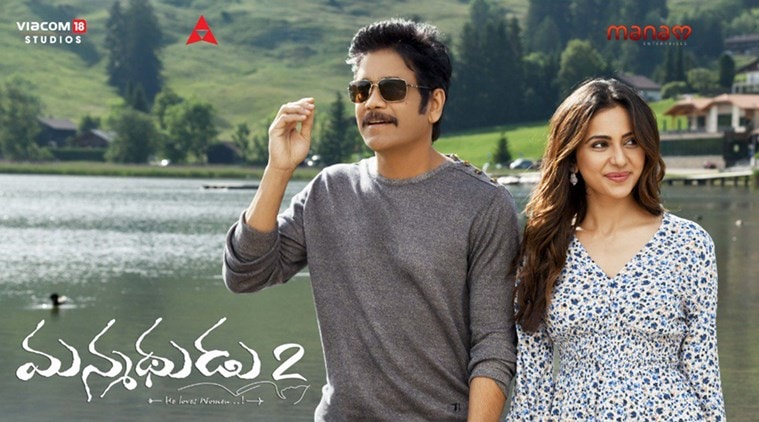
Set in Portugal, the story is centred around a middle-aged singleton, Sam (Nagarjuna) who is a third-generation Indian in Portugal. A brief history of the family reveals how Cassandra in Portugal was inhabited over the years by people of Telugu origin – a clever alibi explaining the large number of people speaking Telugu in Cass’Andhra’. A perfumer by profession, Sam has a sharp taste in exotic fragrances and pretty women – explained adequately through the song, ‘Menina’ (girl in Portuguese). Unaware of his philandering, flamboyant lifestyle, his family – Matriarch mother (Lakshmi), sisters (Jhansi, Devadarshini and Nishanthi) plead, prod and force him to get married because “neeku evaru vandi pedtaru, evaru battalu utukutaru, evaru illu chuskuntaru?”. Yes, a Portugal-bred family has such regressive and irrational reasons. Well, in their defence, “Panivaalu Portugal lo dorkaru”! With a lame premise as this, the movie becomes a ride into turning the womanizer into a householder. Enter Avantika (Rakul Preet) a young waitress who is chosen to be married to Sam. And the rest is just a convolution of elements of mass appeal and a Rahul Ravindran style of slow and simmering filmmaking.

Image result for manmadhudu 2

Rahul Ravindran has been a part of mostly indie and offbeat films, both as an actor and director. His sensibilities are different from the tropes needed in a commercial Telugu film. With Manmadhudu 2, he tries to retain his traits of simple story, subtle humour and conversational story-telling. But this does not come out effectively, mainly because of the poorly written dialogues. The premise is that Telugus in Cass’Andhra’ speak chaste language – something which could have been used effectively for comic relief. But lines like ‘Madhuramaina vyaktivi’, ‘antaraayam kalingchaku’ and ‘Vaidyulu em anaru’ seem farcical. As Sam’s PA, Kishore (Vennela Kishore) says, it is Doordarshan Telugu which is hard to decipher. Barring a few places where it is used comically, it acts as a hindrance to connect to the characters. Also, the uneven pace does not help either – some situations are elaborate while others move swiftly. The biggest inconsistency is the way the lead character has been written. There is not enough explanation for Sam’s aversion to marriage (except his already vibrant life). The love-hate relationship he has with his doting family, which almost makes him look like a Man-child, is not explained well. His quirks like a sensitive nose and OCD for cleanliness do not add anything to the story. The entire blame falls on the writing – the idea was novel but failed in writing or execution.

Coming to the supporting cast, only Rao Ramesh and Lakshmi play on the strengths of their acting prowess and stand out. Vennela Kishore gets major screen-time as the side-kick, but the dialogues or situations do not give him enough material to play with. Even his comic timing does not deliver enough laughs. Nagarjuna looks dapper and is a treat to the eyes, until he takes his sunglasses off, revealing his paunchy-eyes that give away his age. As admitted by himself, he is not a great actor but a great star- not disappointing his fans on the star quotient. But, he is uneasy and listless in most of the scenes that require emotion. Even the short flashback which is meant to explain his current state has him overact and create a caricature out of himself. It was refreshing to see Rakul Preet hold her ground by delivering a strong performance. She flaunts her curves as much as she displays her emotions. But, her efforts go in vain as it does not hold the movie together.

Cleverly naming the movie as Manmadhudu 2 ensured a certain section of the audience to return to the theatres, expecting the fun and frolic ride of ‘Manmadhudu’. But, if you expect Trivikram’s stellar dialogue writing, impeccable comic timing of all the actors and a coherent story, you will be disappointed.

My Rating – 2/5

Saturday, July 27, 2019

Bon Appetit with Curious Appetite!

India is a country with great obsession for cricket, films and food. We may be divided by languages and states, but we all share a common love for food. Being a film fanatic and a food lover, I have always been fascinated by the drool-worthy food that our cinema brings to the big screen. From the mouth-watering dabbas in ‘Stanley ka Dabba’ to the delectably described bourguignon in ‘Julie and Julia’, the glimpses of food from across the world gives foodies like me a major high! Though shows like MasterChef Australia enjoy immense patronage in India, a food-loving country such as ours needs frequent doses of food-porn!

So, when you are in the middle of a never-ending meeting or stuck in the traffic, even a glimpse of delicious food can satiate you. This is when I stumbled upon a great food blog, curated by a dear friend of mine – Curious Appetite! Curious Appetite gives a peek into finger-licking good food, that gives you an instant rush! While I loved all of their posts, listing a few favourites here:

Eat like a King when served like a King: Bored of the usual fare at home or the typical menu at most restaurants? A sumptuous and lavish Thali is the answer! Just like Jodhaa’s rich and extravagant Thali for Akbar (Jodhaa Akbar – 2008), this Thali from Curious Appetite got me all drooling! Continue reading while I run to Ardor 2.1 for this Thali - RIGHT NOW!


View this post on Instagram

Saw a lot promotion for this place all over the social Media so decided to head to Ardor 2.1 at CP . . We went to try the Modiji ki 56” ki thali aka Khalibali Bahubali Thali . . They claim it to be India’s largest thali that weighs approximately 8.5kg Net . . This thali can be shared with 4 persons, incase it is more than 4 then the per person charge is linearly proportional to the total price of Thali . You can refill the curries , drinks , breads and sweets but not the appetisers . . They will make you wait 30-40 minutes for this thali claiming that it is prepared from the scratch basis every order they receive. This was something which I found it hard to believe though. . The presentation of thali is totally instagram worthy but The taste and quality was totally average. It didn’t meet the expectations and the hype that was created around this place . . Even the service was not upto the mark . It was quite slow , the staff had to be reminded time and again for everything. . Would definitely appreciate them for the unique and new concept of thalis that they have come up with. Kudos !! You can also try their election special thali which comes in the shape of India ‘s Map with dishes from different states . However it didn’t live up to it’s aura that was created around it . . Also they didn’t even accept the confirmed booking from eazydiner and made us wait for the table @eazydinerdelhi . . Ratings 🌟🌟 . . What has been your experience? Share in the comments below . . Stay curious!! . . #food #foodblogger #indianfoodbloggers #bloggersofindia #foodiesofinstagram #eatgram #forthegram #foodporn #foodphotography #foodie #foodgasm #likeforlikes #followforfollowback #ardor2.1 #cp #delhifood #delhi #thali #indianthali #modijikithali #bahubali #khalibali #eazydiner #curiousappetite
A post shared by Curious Appetite (@curiousappetite50) on

Easy on the pockets and pleasing for the tummy: Not every delicious meal you eat out must pinch your pockets. Like DJ (Aamir Khan) relishes food at his mother’s Dhaaba (Rang De Basanti - 2004) and says – Dhabe mein maa ke haath ka khana milta hai! And this post of garma-garam Amristari Kulcha with dollops of butter, served with Dhaba-style Chhole and Pyaaz ki Chutney can make anyone salivate and run to the nearest dhaba! I think I have got your weekend plans sorted – head to a dhaba and relish such kulchas!
Khata Rahe Mera Dil: If the South is synonymous with Idli-Sambaar, Chole Bhature can be declared the staple diet of the North! Making us drool every Sunday, Curious Appetite brings to us handpicked restaurants and eateries that serve delicious Chole Bhature, turning our Sundays #TemptingSundays. Like Chef Roshan Kalra (Saif Ali Khan in Chef - 2017) says, “World ke Best Chhole Bhature Dilli mein milte hai”, I am craving for this Dilli-wali delightful spread of tangy chhole and crispy bhature from Billi Di Hatti.
Comfort Food Craves: There are days when we treat our tummies to a rich and lavish spread at restaurants. But some days, we crave for our comfort food like the humble kadi - chawal or the evergreen combo of naan with dal makhni. Curious Appetite gets us glimpses of such food as well, such as this heavenly spread from Empress Delhi or the crispy fritters from Bahadurgarh!


View this post on Instagram
Have you tried these yummy crispy stuffed pakodas at Standard Sweets Bahadurgarh. πŸ‘‡πŸ»πŸ‘‡πŸ»πŸ‘‡πŸ»πŸ‘‡πŸ» Our All time favourites are the Palak , Aloo and Paneer !! πŸ˜‹πŸ˜‹. Ps : What Murthal is for paranthas , Bahadurgarh is for pakodas πŸ˜‹πŸ˜‹ Comment below with your favourite places to have pakodas! Don’t forget to tag your foodie partners here ! Stay curious ! Keep Following us for food updates 🀩 #foodblogger #foodphotography #foodie #foodiesofinstagram #foodporn #instafood #foodgasm #indianfoodblogger #foodbloggersofinstagram #discoverdelhi #pakoda #pakodas #bahadurgarh #standardsweets #snack #pakodalovers #likeforlikes #followbackinstantly #followforfollowback #follow4followback #followusnow #followusforupdates #foodtalkindia #indianfood #delhifoodbloggers #delhifood #delhistreetfood
A post shared by Curious Appetite (@curiousappetite50) on


Delish Desserts: It wouldn’t be wrong to declare that a majority of us Indians have a sweet tooth. People like us don’t say cheese when we click pictures. We say sweets! (Bad joke, I Know!) But Curious Appetite has an eye for some of the most yummilicious desserts and shakes, and they regularly post tons of pictures and videos on their account! Check out these lick-worthy, chocolate-laden ice creams! Slurping at these pics right now!

View this post on Instagram
Chocolate is nature’s way of making up for weekdays!! . . This legendary dessert 🍨Missippi Mudpie at Big Chills is a complete soul food for all the chocolate lovers !! . . It is loaded with super rich and thick dark chocolate ice cream with a perfect bottom layer of peanut butter. To add to it ‘s heavenly feel it is layered with the perfect melted chocolate . Every bite of this will make you fall in love in with it all over again ! . This is what we need for perfect sweet endings πŸ«πŸ’– . This is definitely in our list of all time favourites πŸ’• . Don’t forget to follow @curiousappetite50 for food updates!! . Tap on post the to show your love for desserts ! . Tag your favourite places for desserts in comments below ! . Stay curious!! #missipimudpie #photooftheday #instafoodgram #dessert #dessertlover #foodgasm #foodporn #foodlover #foodisbliss #foodislife #foodislove #foodgram #foodblogger #indianfoodbloggers #delhifoodbloggers #discoverdelhi #desserttable #picoftheday #postoftheday #instadessert #staycurious
A post shared by Curious Appetite (@curiousappetite50) on


Get your daily dose of food-porn! Follow Curious Appetite now:
Instagram - https://www.instagram.com/curiousappetite50/
Facebook - https://www.facebook.com/curiousapetite50/